How to Reconfigure Your Office Without Buying New Furniture
Many businesses do not need a full refurbishment to fix their office for hybrid working - they need a smarter reconfiguration. This guide explains how to adapt your existing workspace layout, adjust your furniture mix, and build in flexibility that allows the space to evolve as your team's patterns change.

Table of Contents

Why reconfiguring is usually better than replacing
When a team grows, shifts to hybrid working, or changes how it collaborates, the instinct is often to buy new furniture. But in many cases, the existing furniture is not the problem - the layout is. Reconfiguring what you already have is faster, cheaper, and significantly less wasteful than purchasing new pieces.
This guide explains how to approach an office reconfiguration without committing new capital to furniture, and how a circular furniture subscription makes ongoing reconfiguration part of the service rather than a one-off event.
When to reconfigure rather than replace
- Your headcount has changed. More people, fewer people, or a shift in ratio between in-office and remote workers all justify a layout review - not necessarily new furniture.
- Your working patterns have shifted. If your team now comes in primarily for collaboration rather than individual focus work, a layout built around rows of assigned desks no longer serves them.
- Certain zones are always empty and others are always full. This is a layout problem. A zone that is never used is furniture occupying space that could serve a different function.
- New starters do not have adequate space. Before buying more desks, assess whether existing furniture can be redistributed to accommodate growth.
How to plan an office reconfiguration
- Start with a space audit. Walk the office and record which zones are used, how frequently, and by how many people. This gives you an evidence base for changes rather than a set of competing opinions.
- Map your zone requirements. Based on how your team actually works, identify the zones you need - focus workstations, collaboration tables, quiet booths, social areas - and roughly how much space each should occupy.
- Inventory your existing furniture. List what you have, what condition it is in, and which pieces are genuinely useful. Some furniture will map onto the new activity zones; some may not.
- Design the new layout. Use your floor plan and furniture inventory to test different configurations on paper before moving anything. This is where most time should be spent - moving furniture twice because the first configuration did not work is expensive and disruptive.
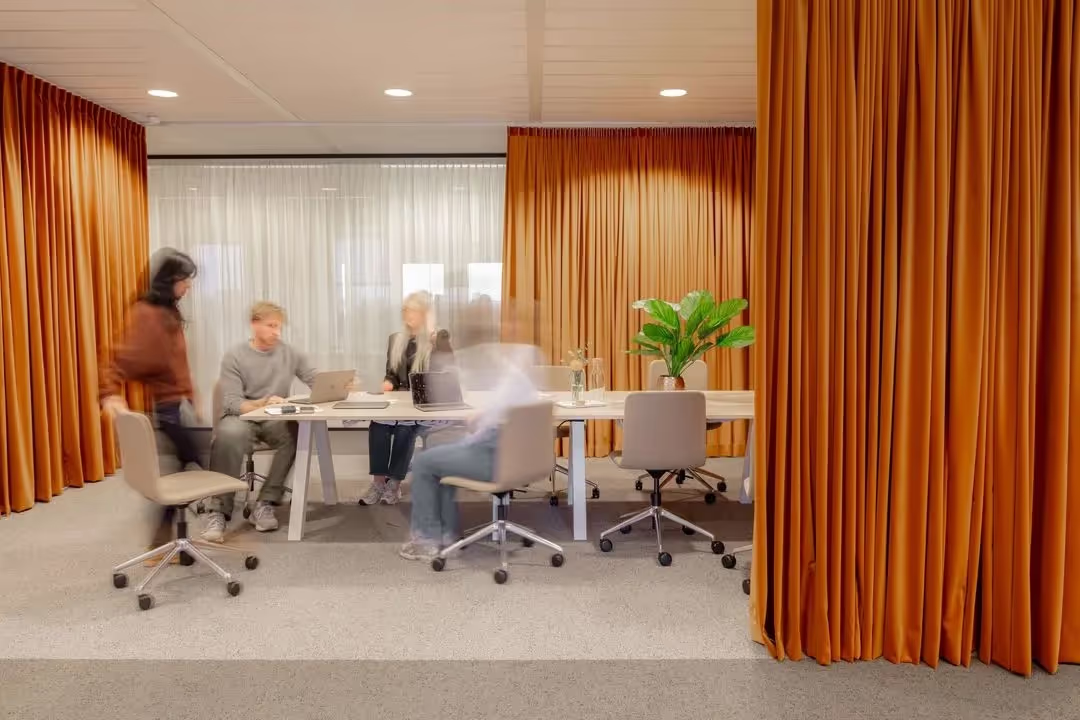
How a circular subscription model enables ongoing reconfiguration
For businesses that expect their space requirements to keep changing, a circular furniture subscription makes reconfiguration a built-in service rather than an exceptional event.
- Add furniture without a procurement cycle. If you need more workstations, meeting room chairs, or acoustic screens, you request them through the subscription. There is no purchase order, no delivery wait of months, and no capital event.
- Return what you no longer need. If a zone is underused or your team has shrunk, surplus furniture can be returned without penalty. There is no storage cost and no disposal problem.
- Reconfigure with provider support. A subscription provider can advise on layout changes, design reconfigurations, and assess what additional pieces are needed - as part of the ongoing service relationship.
Key Takeaways
- Reconfiguring existing furniture is usually faster, cheaper, and less wasteful than buying new pieces when working patterns change.
- Start with a space audit - evidence-based layout decisions are better than opinion-based ones.
- A circular subscription converts reconfiguration from a capital event into a service request - add, remove, or rearrange as your needs change.
- The goal is a layout that reflects how your team actually works, not how they worked when the office was originally designed.
Need to reconfigure your office without buying new furniture? Talk to NORNORM about how our subscription model handles ongoing changes.