How to Redesign Your Office for Hybrid Working Without a Costly Fit-Out
Hybrid working has changed what offices are for - and most companies are still furnishing them the same way they always have. This guide explains how to redesign your workspace layout for hybrid working without a costly full fit-out, using furniture flexibility rather than capital expenditure.

Table of Contents

What hybrid working means for office design
Hybrid working - where employees split their time between the office and elsewhere - has become the dominant model for knowledge-work businesses. But most offices were not designed for it. They were designed for five-days-a-week, assigned-desk attendance, and a relatively static team.
Redesigning for hybrid does not mean ripping everything out and starting again. In most cases, it means rethinking how space is allocated, how zones are used, and how furniture enables rather than constrains the ways people actually work when they come in.
What employees actually use the office for in hybrid working
When people work at home for part of the week, they come to the office for specific reasons - not because it is the only place they can work. Understanding those reasons shapes how the space should be designed.
- Collaboration. Meetings, workshops, brainstorms, and team rituals that are harder to do remotely. The office needs spaces that facilitate these well.
- Social connection. Seeing colleagues, informal conversation, and the ambient energy of a shared workspace. Breakout areas, informal seating, and kitchen zones matter more than most designers acknowledge.
- Focus work that is difficult at home. Not everyone has an ideal home working environment. Some people come to the office specifically for quiet, concentrated work - and need spaces that support this.
- Access to equipment and resources. Large monitors, reliable fast internet, printers, and meeting room technology. The office as a better-equipped workplace.
How to redesign your office zones for hybrid working
- Reduce assigned desks, increase variety. If attendance is typically 50-70% on any given day, you do not need a desk for every person. Use the freed space for collaboration zones, quiet rooms, and social areas.
- Create clearly defined zones. Focus zones for quiet work, collaboration zones for team meetings and workshops, social zones for informal interaction, and phone or video call booths. Clear zone definition helps people choose the right environment quickly.
- Make collaboration spaces bookable but also spontaneous. Not all collaboration is planned. Informal gathering spaces - standing tables, writable walls, cluster seating - support the unplanned conversations that are often the most valuable.
- Invest in acoustic separation. In a mixed-use office, noise management is critical. Acoustic screens, booths, and soft furnishings all reduce the friction between zones.
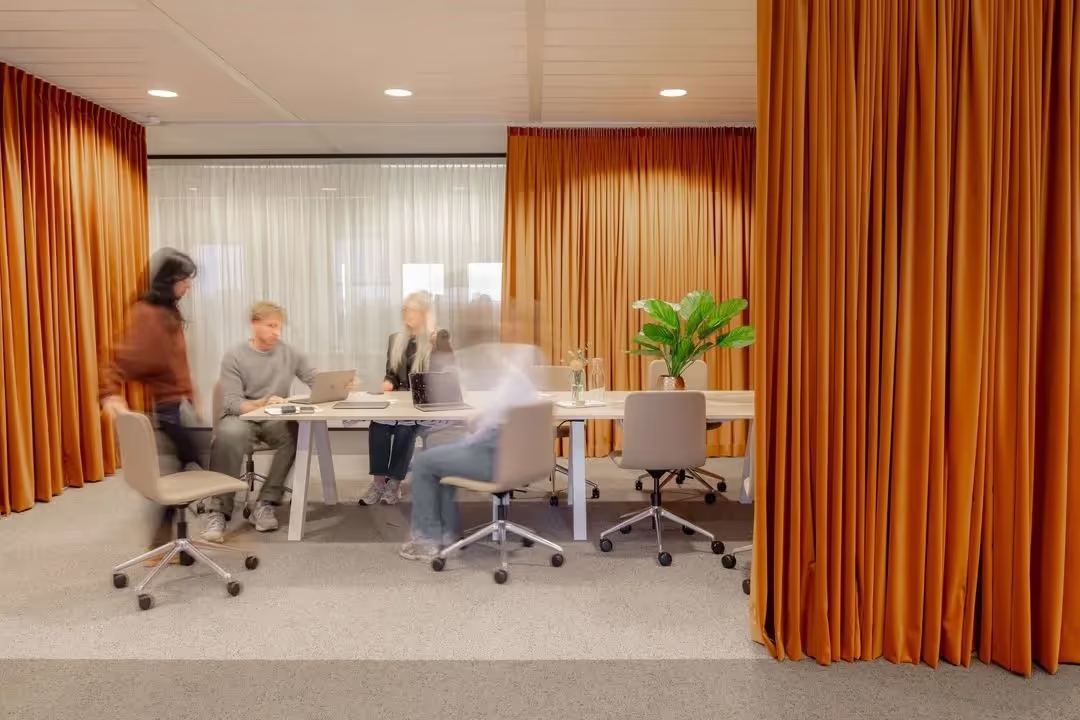
How to redesign without a full and costly fit-out
A full commercial fit-out - stripping back to shell and rebuilding - is expensive, disruptive, and usually unnecessary for a hybrid redesign. In most cases, the changes needed are furniture-led rather than structural, which means they can be made faster and at a fraction of the cost.
- Reconfigure what you have first. Move desks from underused areas to create collaboration zones. Reposition storage to define space boundaries. Assess what is genuinely not working before spending anything.
- Add zone-defining furniture. Acoustic screens, modular seating, and standing-height tables can define new zones without structural changes. These are furniture decisions, not building decisions.
- Use a circular subscription for flexibility. A circular furniture subscription lets you reconfigure as your working patterns evolve, without committing capital to a fixed layout. If the hybrid model changes - more or fewer days in the office, different team structures - the furniture changes with it.
Key Takeaways
- Hybrid working requires a different office design - fewer assigned desks, more varied zones, and spaces built for the specific reasons people choose to come in.
- Zone definition is the most important design decision - focus, collaboration, social, and call zones give people the context they need to choose the right environment.
- A full fit-out is usually not necessary. Most hybrid redesigns are furniture-led and can be completed faster and at lower cost than a structural refurbishment.
- A circular furniture subscription builds flexibility into the design, so the layout can evolve as working patterns change.
Ready to redesign your office for hybrid working? Talk to NORNORM about a flexible approach that does not require a full fit-out.