Activity-Based Working: How to Design the Furniture Around It
Activity-based working gives people choice over where and how they work within the office - but it only works when the furniture is right for each activity. This guide explains what furniture an ABW office needs, how to set up hot-desking properly, and how to proportion the zones for a hybrid team.

Table of Contents

What is activity-based working and why does furniture matter?
Activity-based working (ABW) is an office design philosophy where people choose their workspace based on the task they are doing rather than sitting at an assigned desk for the whole day. Instead of rows of identical workstations, an ABW office provides a range of settings - focus desks, collaborative tables, quiet booths, social areas, meeting rooms of different sizes - and people move between them as their work changes.
The concept is not new, but its relevance has grown significantly as hybrid working has reduced in-office attendance and changed why people come to the office. When attendance is selective rather than mandatory, the office has to offer more than a desk - it has to offer an environment that is actively better for the work people come in to do.
Furniture is the primary mechanism through which ABW principles are implemented. Zone definition, acoustic separation, ergonomic quality, and flexibility are all furniture decisions before they are architectural ones.
What zones does an activity-based working office need?
- Focus zone. Clean, quiet workstations for individual concentrated work. No assigned seating - hot-desking protocol. Acoustic screens or separation from noisier zones. Height-adjustable desks are valuable here.
- Collaboration zone. Tables at which multiple people can work together - larger surfaces, easy connectivity, whiteboards or writable surfaces nearby. This zone should be easy to book for team sessions but also available for spontaneous use.
- Social zone. Informal seating, a kitchen or coffee point nearby, and a lower acoustic threshold. This is where people decompress, build relationships, and have conversations that do not fit a meeting format.
- Phone and video zone. Acoustic booths or enclosures for calls that require concentration or privacy. This is the zone most frequently underspecified and most frequently complained about.
- Project or workshop zone. Larger open space with reconfigurable furniture that can be arranged for workshops, all-hands, or temporary project work. Tables and chairs that stack or fold are useful here.
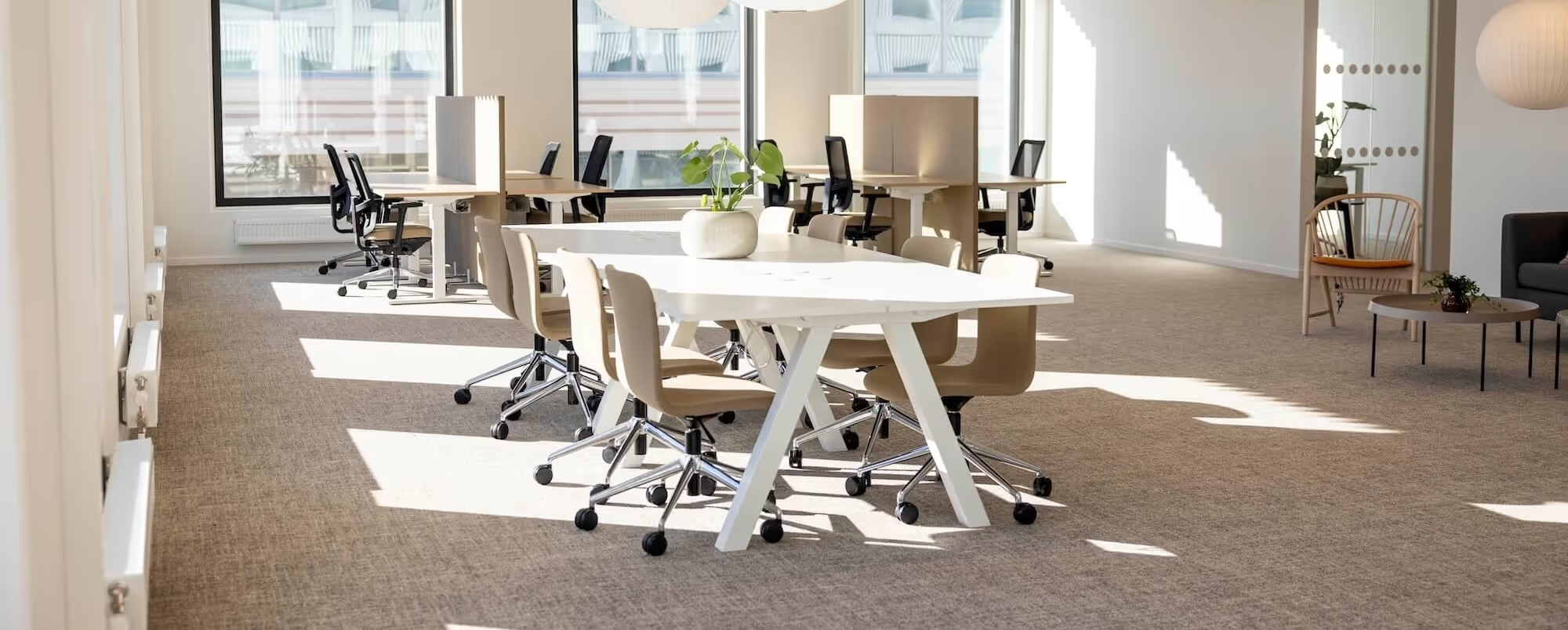
Furniture principles for an activity-based working office
- Zone legibility. Each zone should be visually distinct. Furniture type, colour, and layout all contribute to making it immediately clear what a zone is for - which reduces friction in choosing where to work.
- Acoustic quality. In a mixed-use open office, acoustics are the biggest source of friction between zones. Invest in acoustic screens, soft furnishings, and booth solutions. This is not a luxury - it is the foundation of ABW working well.
- Ergonomic consistency across zones. Not just at the focus desk. Meeting chairs that people use for two hours, collaboration seating for standing-height tables, and lounge furniture that is comfortable enough to actually work from - all of these need ergonomic consideration.
- Scalability and flexibility. An ABW office should be able to grow, shrink, and reconfigure as the organisation changes. Furniture that is modular, stackable, or easily moved supports this. A circular subscription makes this structural.
Key Takeaways
- Activity-based working requires a range of furniture settings, not rows of identical desks. The zones - focus, collaboration, social, call, project - each have different furniture requirements.
- Zone legibility and acoustic quality are the most critical design decisions. Without these, ABW does not work in practice.
- Ergonomics matter across all zones, not just the main workstation.
- A circular furniture subscription makes ABW scalable - zones can be added, reduced, or reconfigured as working patterns evolve. See also: what employees need from the office.
Designing an activity-based working office? Talk to NORNORM about building a zoned workspace that adapts as your team evolves.