Furnished vs Unfurnished Office: A Cost Comparison
Furnished and unfurnished offices have different cost structures, different upfront requirements, and different levels of flexibility. The right choice depends on your lease length, headcount trajectory, and how much control you want over the design. This guide explains the real cost differences and when each option makes sense.

Table of Contents

Furnished vs unfurnished office: the core question
When taking on commercial office space, you face a choice that affects your cash flow, your time to occupancy, and your ongoing flexibility: do you take a furnished space or an unfurnished one and fit it out yourself?
Both models are common. Both have legitimate use cases. The right answer depends on your lease length, your growth trajectory, your capital position, and how much you want to control the design of your space. This guide breaks down the real costs of each and helps you decide which makes sense for your situation.
What unfurnished office space actually costs
The headline rent of an unfurnished office is typically lower than a furnished equivalent. But the headline rent is not the full real cost. Before you can use an unfurnished space, you need to add everything that a furnished space already includes.
- Furniture purchase or subscription. A 30-person office at mid-market specification requires £25,000-£50,000 of furniture if bought outright, or a monthly subscription fee if taken on a circular model.
- Design and space planning. Unless you are doing it yourself, space planning and interior design for a new fitout costs £2,000-£10,000 for a mid-size office.
- IT infrastructure. Cabling, access points, server setup, and screen installation. Typically £5,000-£20,000+ for a 30-person office.
- Building works. If the space needs partition walls, decorating, or other works before it is ready, these are your cost. The difference between Cat A and Cat B is relevant here.
- Procurement time. Sourcing furniture, briefing designers, managing contractors, and coordinating installation is a significant time cost.
What furnished office space actually costs
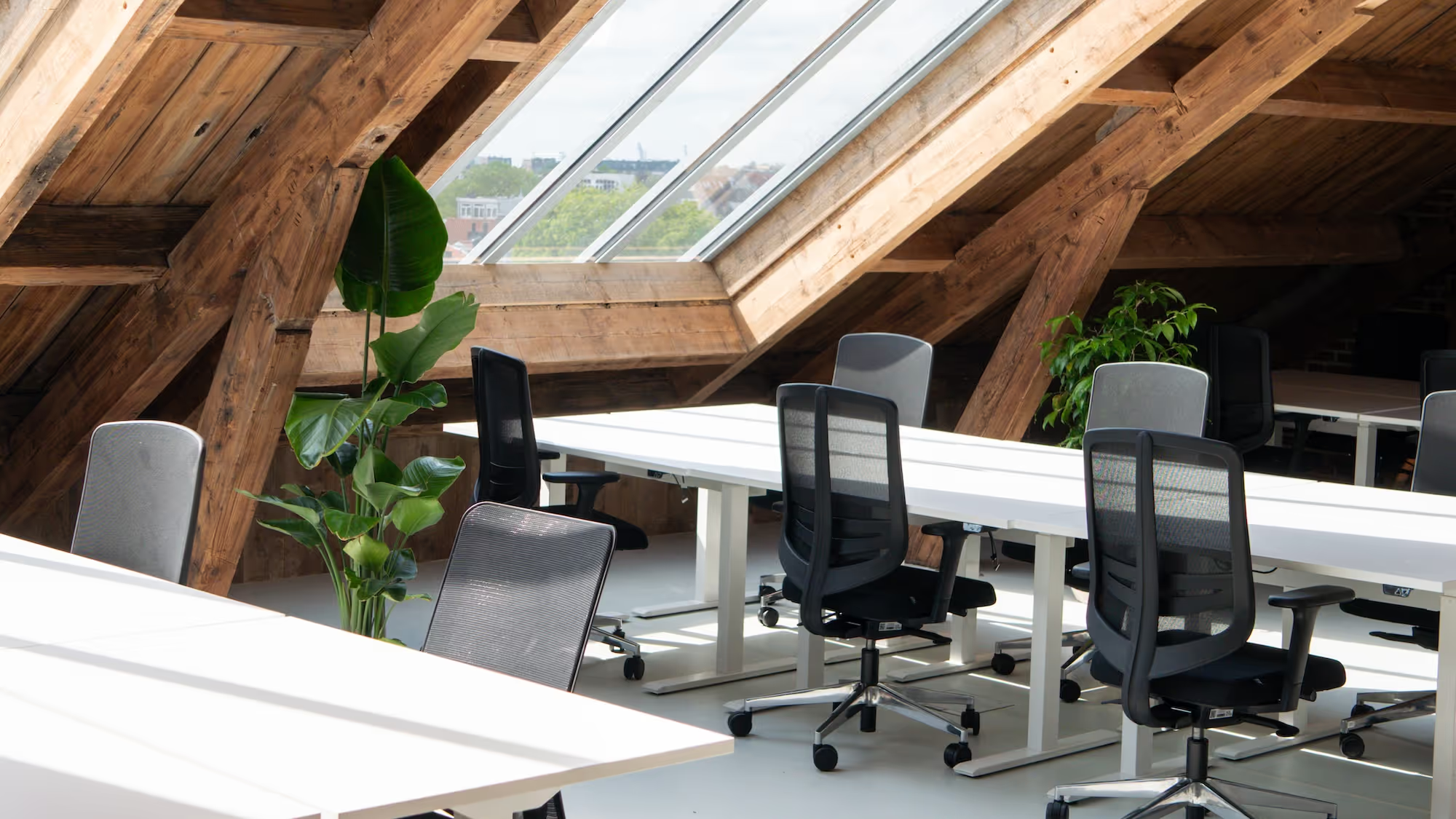
A furnished office space - either a serviced office, a managed office with furniture included, or a space furnished through a circular subscription - has a higher headline cost than an unfurnished equivalent. But it includes most or all of the setup costs that unfurnished spaces require.
- Higher monthly rent or all-in fee. Serviced and managed offices bundle service charges, business rates, and often IT into a single fee.
- Shorter minimum terms. Furnished and serviced spaces typically offer shorter minimum commitments - one to three years versus three to ten for direct leases.
- No setup cost. Design, installation, and procurement are handled. Day-one readiness is built into the arrangement.
Which is better: furnished or unfurnished?
- Take furnished if: your lease is under three years, your capital is better deployed elsewhere, your headcount is uncertain, or you need to be operational quickly.
- Take unfurnished if: your lease is five years or more, you have specific brand or design requirements, your capital position is strong, and you have the time and resource to manage the setup.
- Consider a subscription within an unfurnished space if: you want the design control of an unfurnished space but the capital efficiency and flexibility of a furnished model.
Key Takeaways
- Unfurnished offices have a lower headline rent but require significant additional investment before they are usable.
- Furnished offices have a higher headline cost but include setup and offer shorter minimum terms.
- A circular subscription within an unfurnished space gives you design control without the capital commitment of buying.
Want to understand what a subscription model would cost for your space? Talk to NORNORM for a no-obligation quote.