Cat A vs Cat B Office Fit-Out: What You Need to Know
Cat A and cat B are the two standard levels of commercial office fit-out - but what they mean, what they cost, and which is right for your business is frequently misunderstood. This guide explains both clearly and introduces a practical alternative that many businesses now use instead of a full cat B fit-out.

Table of Contents

Cat A vs cat B office fit-out: what the terms mean
Cat A is the landlord-provided base fit-out, while Cat B is the tenant-specific fit-out that turns that space into a fully operational workplace. Cat B typically adds elements such as partitions, meeting rooms, kitchens, IT infrastructure and furniture.
Because Cat B requires additional tenant investment, the cost can increase quickly depending on specification, location and scope. This guide compares Cat A, Cat B and Cat A+, and explains where a circular furniture subscription can provide a more flexible alternative to buying office furniture.
What is Cat A office space?
Cat A (Category A) office space is a commercial property that has been brought to a base level of finish by the landlord, ready for a tenant to fit out. It typically includes raised floors and suspended ceilings, basic mechanical and electrical services (HVAC, lighting, power distribution), lifts and common areas, fire safety systems, and a reception or entrance but no fit-out, partition walls, or furniture.
Cat A is the blank canvas. The landlord has made the building functional and safe. What it does not have is anything that makes it usable for a specific business.
What is Cat B office space?
Cat B (Category B) is the fitout that turns Cat A into a working office. This is the tenant's investment - the partitions, the meeting rooms, the kitchen, the reception desk, the lighting specification, the furniture, and the IT infrastructure. Cat B is everything that makes the space specific to your business.
The cost of a Cat B fitout varies significantly by specification, location, and scope. As a broad guide, Cat B fitout costs range from £50 to £200 per square foot in UK markets, with Central London typically at the upper end and regional cities below it.
What is Cat A+ (Cat A Plus)?
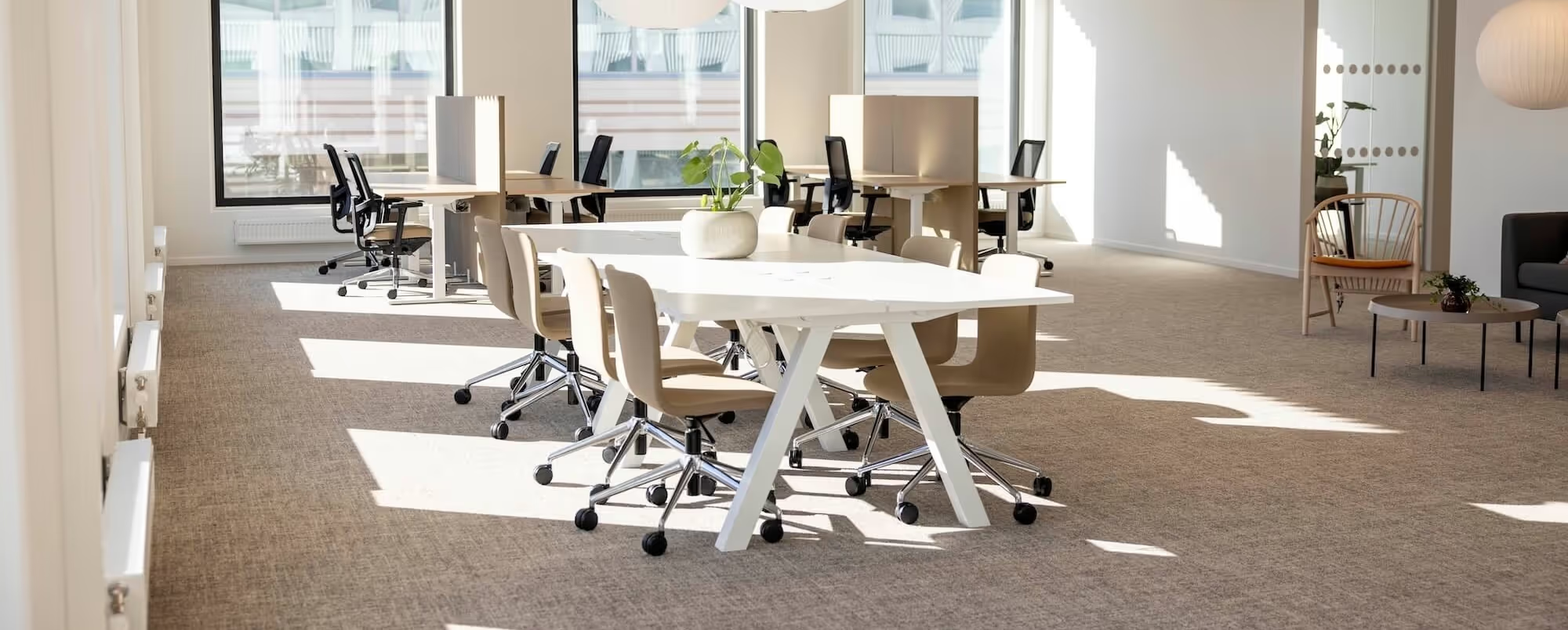
Cat A+ is a relatively recent addition to the spectrum - a level of finish that sits between Cat A and Cat B. A landlord delivering Cat A+ has gone beyond base specification to include some of the elements traditionally associated with Cat B: furniture, meeting rooms, basic IT infrastructure, and design.
Cat A+ spaces are designed to be plug-and-play for tenants - particularly those on shorter leases who do not want to commission a full Cat B fitout. A circular furniture subscription is increasingly used to deliver Cat A+ specification efficiently: the landlord furnishes the space through a subscription, the tenant moves in, and the furniture can either be transferred to the tenant or adapted for their specific needs.
Cat A vs Cat B: what does each cost?
- Cat A cost. Typically borne by the landlord and built into the terms of the lease - either through the rent-free period or a capital contribution.
- Cat B cost. Typically £60-£100 per sq ft for a standard commercial fitout in the UK. For a 2,000 sq ft office, this means £120,000-£200,000 before furniture. Furniture adds a further £25,000-£80,000 depending on specification.
- Cat A+ cost. A landlord delivering Cat A+ with furniture through a circular subscription may spend £15-£30 per sq ft on furniture provision - significantly less than a full Cat B fitout.
Dilapidations: the Cat B cost that is easy to overlook
Dilapidations are the costs of returning a leased space to its original condition when the lease ends. If you take on a Cat B fit-out, you are typically responsible for reinstating the space to Cat A, or sometimes shell, condition. That can mean removing partitions, making good walls and ceilings, and clearing out furniture.
This cost rarely makes it into the original fit-out budget. It tends to arrive as a surprise just as the lease is ending, so it is worth pricing in before you commit to a Cat B fit-out. The exact obligations depend on your lease, so check yours before you budget.
A NORNORM subscription takes the furniture out of that equation. The furniture is collected at the end of the subscription, so there is nothing for you to remove or dispose of. Pair it with a Cat A or Cat A+ space, where you have not built partitions or other fit-out works, and there is little or nothing left to reinstate.
Key Takeaways
- Cat A is the landlord's base fitout - functional but not usable for a specific business.
- Cat B is the tenant's fitout - partitions, meeting rooms, kitchen, furniture, and IT. Budget £60-£100 per sq ft plus furniture.
- Cat A+ is a landlord-delivered intermediate level designed for shorter-term occupiers who do not want to commission a full Cat B.
- A circular furniture subscription is increasingly used to deliver Cat A+ - fast, flexible, and without the landlord committing capital to owned furniture assets.
Interested in furnishing a Cat A+ space or delivering Cat A+ as a landlord? Talk to NORNORM about how our subscription model supports this.