What No One Tells You About Office Fit-Outs
A traditional office fit-out is expensive, inflexible, and creates a disposal problem at the end of the lease. For most businesses, there are better ways to furnish a new office. This guide exposes what a fit-out actually costs and explains the alternatives that increasingly make more sense.

Table of Contents

Nobody tells you about the disposal problem
When you commission an office fit-out, the conversation is entirely about what goes in: the furniture, the finishes, the layout, the budget. Nobody mentions what happens when the lease ends and you have to get it all out. The disposal problem is real, it is expensive, and it almost always comes as a surprise.
A mid-size office clearance - 50 people, mid-range furniture - typically costs £2,000-£10,000 in clearance fees. Most of the furniture goes to landfill. If you have sustainability commitments or ESG targets, this is a problem that has no easy solution once the furniture has been bought.
The cost problem nobody plans for
Office fit-out budgets are built around what goes in. The cost of getting it out is rarely planned for and almost never funded.
- Clearance costs are higher than most people expect. A professional clearance company charges by volume and access difficulty. For a full office floor, costs of £5,000-£15,000 are not unusual - and that is before any dilapidations work.
- Second-hand furniture has limited value. Unless the furniture is premium-grade and in excellent condition, second-hand dealers offer little or nothing. Most commercial furniture has negligible resale value after five years of use.
- Landfill is the default. Without a specific plan to donate, resell, or circularly dispose of furniture, most of it goes to landfill - with the environmental and reputational consequences that implies.
The flexibility problem nobody anticipates
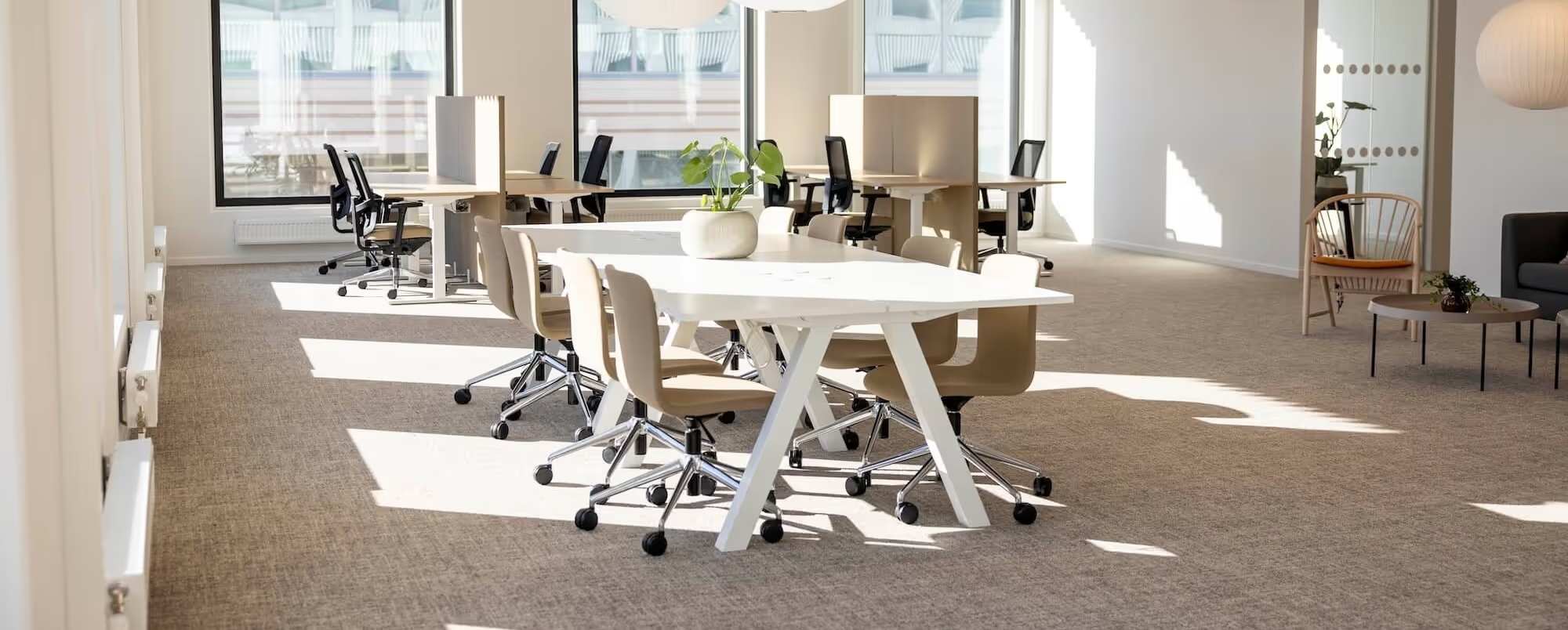
The second thing nobody tells you about office fit-outs is how quickly the furniture becomes wrong for the space. A company that was 30 people when the fit-out was designed may be 60 people 18 months later - or 20 people. The furniture does not adjust. Understanding the difference between Cat A and Cat B fit-outs is the first step to making a smarter decision.
What the circular furniture subscription model solves
A circular furniture subscription addresses both the disposal problem and the flexibility problem at once. The furniture is not yours - it belongs to the provider. At the end of the subscription, they collect it. There is no clearance cost, no landfill, and no stranded asset. And when your team grows, shrinks, or changes its working patterns, the furniture changes with it.
Key Takeaways
- The disposal cost of a fit-out is rarely budgeted for and almost always comes as an unpleasant surprise at the end of a lease.
- Most commercial furniture has negligible resale value after five years of use - and most of it goes to landfill without a specific plan.
- Flexibility is built into buying furniture - but inflexibility is what you get. The furniture does not adapt when your team size or working patterns change.
- A circular subscription solves both problems - no disposal cost, no stranded assets, and ongoing flexibility as your business evolves.
Ready to avoid the disposal problem entirely? Talk to NORNORM about how the circular model works.