Lease Space Faster with a Furnished Subscription Model
Vacant office space costs landlords money every day it sits empty. Furnishing it is one of the most effective ways to shorten the vacancy period, attract higher-quality tenants, and achieve stronger rents - without committing significant capital to furniture assets. This guide explains how a circular subscription model makes this possible.

Table of Contents

Why furnished spaces lease faster
Landlords and flex operators who furnish their spaces before marketing them consistently outperform those who offer empty shells. The reason is simple: prospective tenants can see themselves in the space. They do not have to imagine what it might look like or project how long it will take to get operational. The decision becomes easier and faster.
But furnishing a space before it is leased carries a risk: if the tenant does not materialise, the landlord has committed capital to furniture assets sitting in an empty building. A circular furniture subscription removes this risk entirely.
How a subscription model reduces vacancy risk for landlords
A traditional furniture purchase is a bet on leasing. A subscription is a service that scales with occupancy.
- No upfront capital commitment. With a subscription, the landlord pays a monthly fee rather than purchasing furniture outright. If the space takes longer to lease than expected, the monthly cost is manageable rather than a sunk capital cost.
- Furniture adapts to tenant requirements. Different tenants have different needs. A subscription model allows the furniture configuration to be adjusted for each new tenant without replacing everything.
- Easy to remove or reconfigure. If a tenant wants to bring their own furniture or has specific requirements, the subscription furniture can be collected and the subscription paused or ended. There is no stranded asset to deal with.
- Fast deployment. Because circular furniture is already in stock, a vacant space can be furnished to viewing standard within weeks - significantly faster than procuring new furniture for each space.
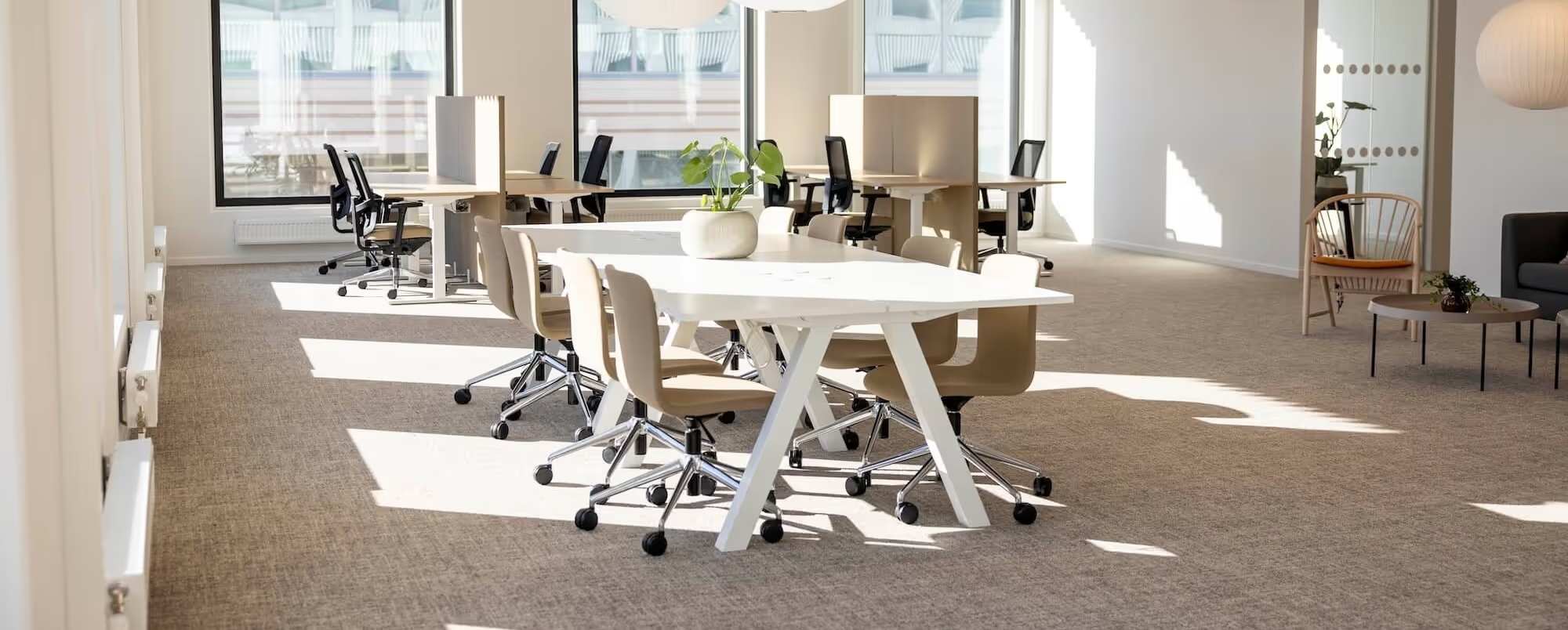
What tenants actually want from a furnished space
Not all furnished spaces are equal. Tenants are increasingly discerning about the quality of furniture included in a managed or serviced office. Generic, worn, or mismatched furniture can actively reduce the appeal of a space rather than increase it.
- Design consistency. A space where the furniture feels considered and coherent is significantly more attractive than one where pieces have been assembled from different sources over time.
- Ergonomic quality. Decision-makers assessing office space think about whether their team will want to work there. Ergonomic chairs, height-adjustable desks, and acoustic zones signal that the landlord has thought about the user, not just the transaction.
- Flexibility. Many tenants want to know that the configuration can change as their team grows. A subscription model lets landlords make this commitment credibly.
Practical steps for landlords considering subscription furniture
- Submit the floor plan. A reputable provider will return a 3D design within 24-48 hours - useful for marketing the space before installation even begins.
- Agree the specification. Work with the provider on a design that suits the likely tenant profile - not just what is cheapest, but what will actually appeal to the businesses you are trying to attract.
- Align installation with your leasing timeline. Have the space furnished at least two to four weeks before the first scheduled viewing, so the space has time to settle and any snagging can be addressed.
- Use the design in marketing materials. The 3D design and, once installed, photography of the furnished space, are valuable leasing assets that go into brochures, listing sites, and social content. See how to stage it for staging and events.
Key Takeaways
- Furnished spaces lease faster because prospective tenants can see themselves in the space and make decisions without needing to imagine the outcome.
- A subscription model removes the capital risk of furnishing before leasing - the monthly cost is manageable even if the space takes time to fill.
- Furniture quality matters. A well-designed, ergonomic space is a competitive advantage in a market where tenant expectations have risen.
- Fast deployment means fast-to-market. Circular furniture in stock means a vacant space can be presentation-ready within weeks.
Want to furnish your space for viewings? Talk to NORNORM about how our subscription model works for landlords.