How Landlords and Brokers Use Events to Lease Office Space Faster
For landlords and brokers with vacant commercial space, events are one of the most effective tools for generating letting momentum - but only when the space itself is ready to impress. This guide covers how to use events strategically to attract tenants, what the space needs to look like, and how to convert attendance into signed leases.
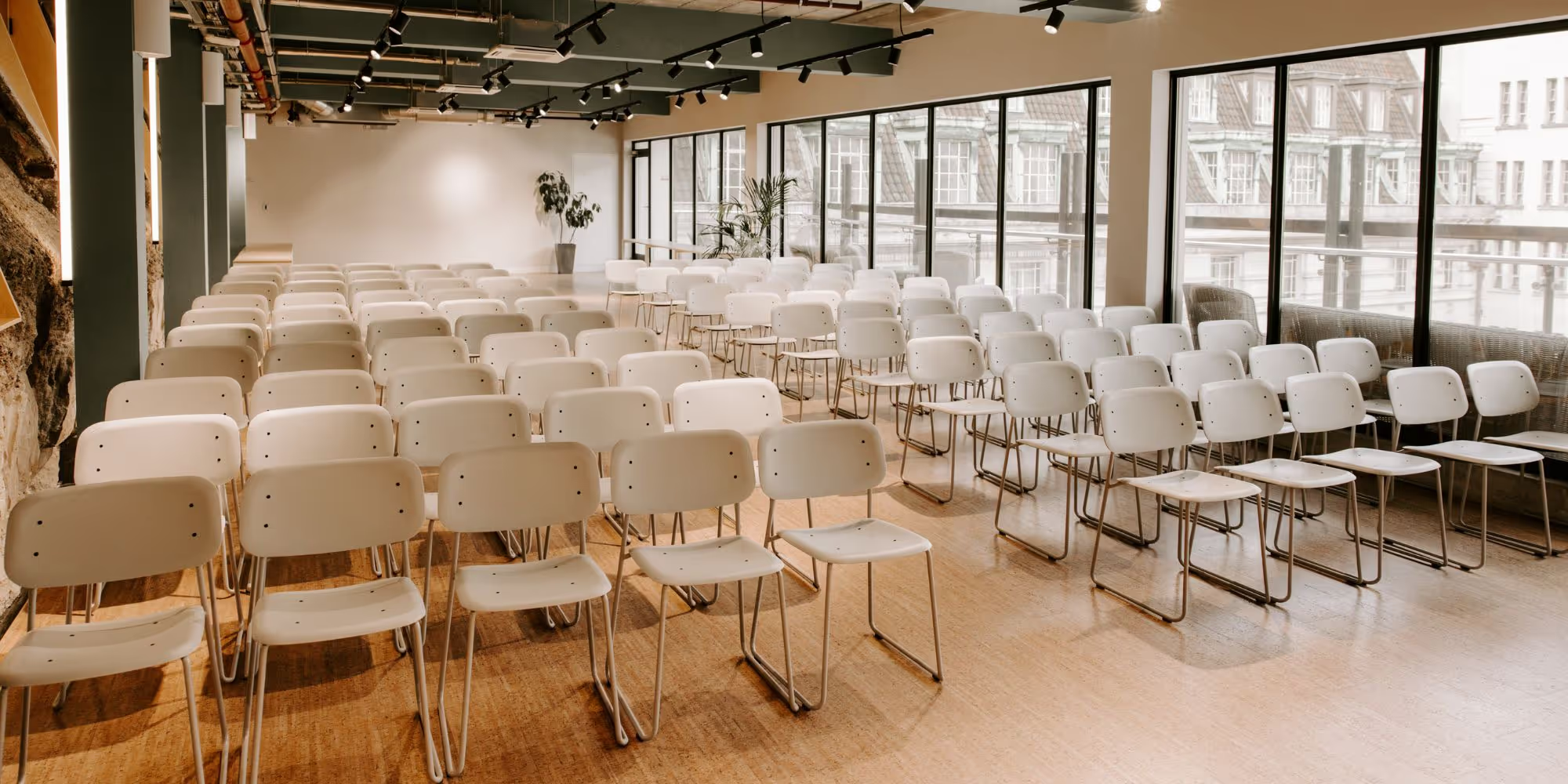
Table of Contents

Why events are one of the most effective leasing tools
Traditional office leasing relies on individual viewings - a prospective tenant, an agent, and a tour of an empty space. This process is slow, creates high dropout rates at each stage, and gives the prospective tenant no sense of the space as a live working environment.
Events change this dynamic. When a landlord or broker hosts a launch event, networking evening, or showcase in a well-furnished space, several things happen simultaneously: the space is experienced rather than imagined, a community of potential tenants is gathered, and peer social proof - seeing that other credible companies are interested - accelerates decision-making.
Types of events that work for office leasing
- Launch events. A launch event marks the opening or repositioning of a space. Invite a curated list of prospective tenants, agents, and press. The goal is to create a moment of visibility and generate a pipeline of follow-up viewings.
- Networking evenings. Hosting a sector-relevant networking event in the space is one of the most effective soft-sell approaches available. Prospective tenants attend for the networking and leave having experienced the space.
- Breakfast briefings. A small-format event - 20 to 30 people, morning slot - works particularly well for presenting the commercial proposition of a space to a targeted audience of decision-makers.
- Pop-up activations. Running a pop-up event - a panel discussion, product launch, or workshop - in the space generates footfall, photography assets, and social content, all of which extend the reach of the leasing campaign beyond the event itself.
How to set up an office space for a leasing event
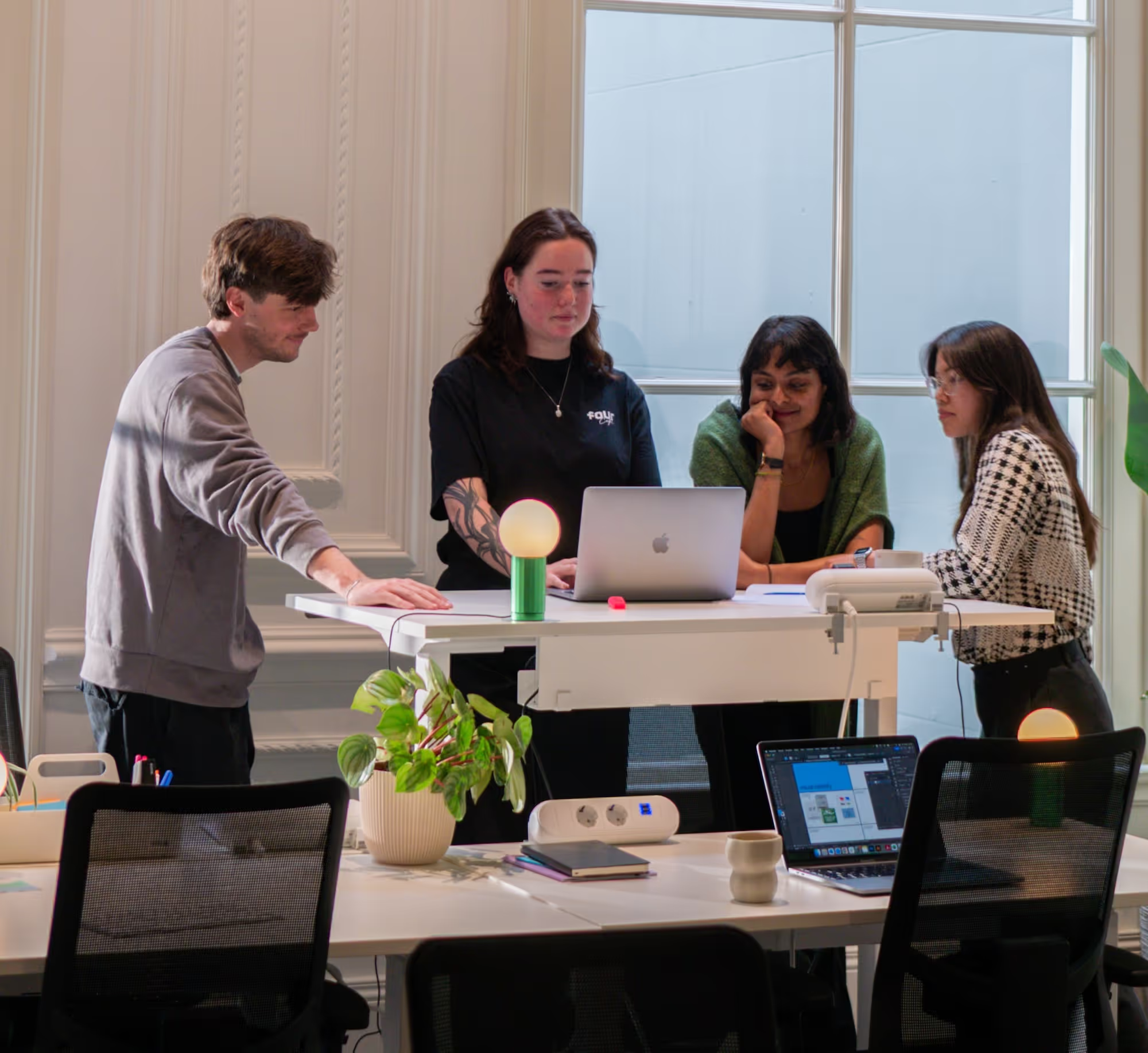
The furniture and layout of the space during an event matters significantly. A bare shell with chairs arranged for a presentation is not the same as a well-furnished workspace that has been set up to receive guests. The former asks attendees to imagine; the latter lets them experience.
- Use the full floor. Do not concentrate people in one corner. Set up multiple zones - a standing drinks area, a sitting cluster, a tour route that moves through the space - so guests naturally explore and form an impression of the whole floor.
- Make the furniture functional. Desks, chairs, meeting tables, and breakout seating that look like a real working environment are more persuasive than event furniture that signals temporary use.
- Control the lighting and temperature. Simple and overlooked - a well-lit, comfortably heated space makes people feel better and stay longer. Harsh fluorescent lighting and a cold shell do the opposite.
- Use branded materials sparingly. Light branding that identifies the space and the landlord or agent is appropriate. Over-branding makes the event feel like a sales pitch rather than a community gathering.
Making events a consistent part of your leasing strategy
One event rarely converts immediately. The value of events in office leasing is cumulative - each event builds awareness, generates follow-up conversations, and keeps the space visible in the market. The most effective leasing campaigns treat events as a recurring tool rather than a one-time activity.
- Plan at least two to three events per quarter for a space that has been on the market for more than 30 days.
- Photograph every event professionally. Photography taken in a well-furnished, occupied space is significantly more compelling than standard architectural photography of an empty shell.
- Follow up with every attendee within 48 hours. The conversion window after an event is short. A personal follow-up from the agent or landlord within two days keeps the momentum going.
Key Takeaways
- Events accelerate office leasing by letting prospective tenants experience a space rather than imagine it, and by creating social proof through peer presence.
- The most effective event formats for office leasing are launch events, networking evenings, breakfast briefings, and pop-up activations.
- Furniture matters at events. A furnished, working-environment setup is more persuasive than event furniture or an empty shell.
- Events work best as a consistent strategy, not a one-time activity - plan at least two to three per quarter for an active leasing campaign.
Need to furnish a commercial space for a launch event? Talk to NORNORM about getting your space presentation-ready within weeks.