How to Furnish an Office with Zero CapEx
For founders and COOs who do not want to spend significant capital on depreciating furniture assets, a circular furniture subscription is the most complete solution - and increasingly the model chosen by VC-backed companies furnishing their first dedicated office. This guide explains how to set up a professional workspace with zero upfront furniture cost.
Table of Contents

What furnishing an office with zero CapEx actually means
Zero CapEx on office furniture does not mean getting furniture for free. It means structuring the acquisition so that furniture costs are treated as operating expenses - recurring monthly payments - rather than a large upfront capital purchase that sits on the balance sheet and depletes available cash.
For most businesses, this distinction matters more than it might initially appear. Capital is a finite resource, particularly for growth-stage businesses. Money spent on furniture is money not spent on hiring, product development, or market expansion. A zero-CapEx furniture model keeps that capital in the business.
How to furnish an office with zero upfront cost
There are two main routes to zero-CapEx office furniture: a circular furniture subscription and a landlord-furnished space. Each works differently and suits different situations.
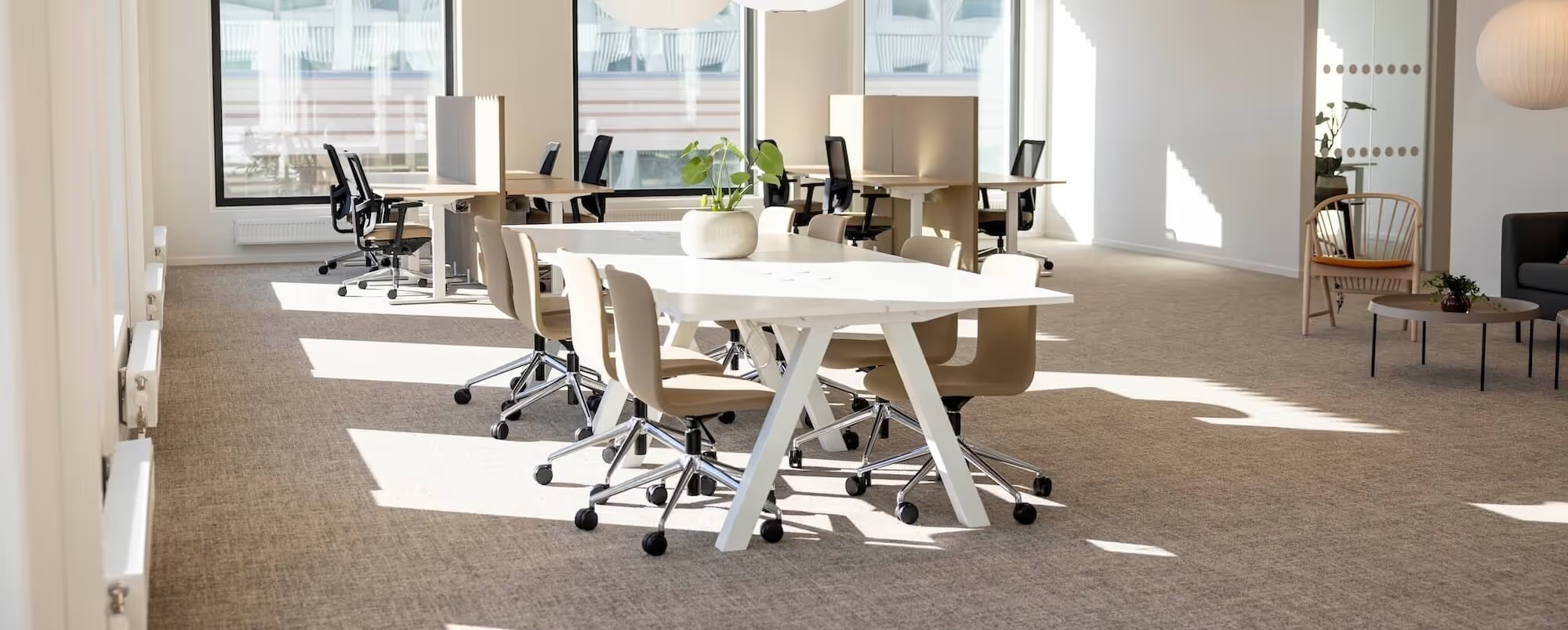
- Circular furniture subscription. You pay a monthly fee per square metre. The provider designs your workspace, delivers the furniture, and installs everything. There is no Day 1 capital payment. The fee is a predictable operating expense that is fully deductible as a business cost. When your needs change - more desks, fewer desks, a new zone - you request the change and the provider handles it.
- Landlord-furnished space. Some landlords offer spaces where furniture is already installed, either as a managed or serviced office, or as a Cat A+ offering where furniture is included in the rent.
Why zero CapEx matters for growing businesses
For growth-stage businesses, preserving capital is a strategic priority. Every pound committed to furniture is a pound not available for the activities that generate revenue and value. The zero-CapEx model reframes furniture as an ongoing service cost rather than a one-time investment - and the financial consequences are significant.
- Improved cash position. A 50-person office that would have cost £60,000-£100,000 to furnish outright is now a monthly operating expense. The cash stays in the business.
- Better balance sheet ratios. No large asset purchase means no depreciation drag on the P&L and no corresponding liability on the balance sheet.
- Faster time to occupancy. Because circular furniture is in stock and the provider handles installation, a zero-CapEx furnished office can be ready in weeks rather than the months it takes to procure and install purchased furniture.
- Built-in flexibility. As headcount changes, the furniture changes with it. No stranded assets, no additional procurement cycles.
Key Takeaways
- Zero CapEx on furniture means converting a capital purchase to an operating expense - predictable monthly costs instead of a large upfront outlay.
- A circular furniture subscription is the most complete zero-CapEx model - it includes design, delivery, installation, and ongoing flexibility in a single monthly fee.
- For growth-stage businesses, preserving capital is a strategic priority - and furniture is one of the easiest costs to convert from CapEx to OpEx.
- Faster time to occupancy and built-in flexibility are additional operational benefits of the zero-CapEx model.
Want to furnish your office with zero upfront cost? Talk to NORNORM about our circular subscription model.