How Fast-Growing Startups Furnish Offices Without the Headache
For fast-growing startups and scale-ups, office furniture is one of the most frustrating operational problems - too slow to procure, too expensive to buy in bulk, and too rigid when headcount changes. This guide explains how the fastest-growing companies approach office furniture, and what to do if you need to move quickly.

Table of Contents

Why startup office furnishing is different
Fast-growing startups face a specific set of challenges when it comes to office furniture. They need to move quickly, they are usually working with limited capital, their team size changes faster than most businesses, and they often care about design and culture - they want a workspace that reflects who they are, not a generic corporate office.
The traditional approach to office furniture - choose a supplier, buy what you need, wait for delivery - does not fit this context well. It is slow, capital-intensive, and leaves you stuck with furniture that no longer works when your team doubles in 18 months.
What fast-growing startups actually need from office furniture
- Speed. A startup that has just signed a lease needs to be operational within weeks, not months. Furniture that takes 12-16 weeks to arrive is a problem.
- Low upfront cost. CapEx on furniture competes with hiring, product development, and marketing. Most founders would rather deploy that capital elsewhere.
- Scalability. A 30-person team today may be a 60-person team in 12 months. The furniture model needs to scale with the business, not constrain it.
- Design quality. Culture matters, especially in competitive hiring markets. A well-designed office sends a signal to candidates, clients, and investors.
- Flexibility. Hybrid working patterns, hot-desking, collaboration zones - the modern startup office evolves constantly. The furniture needs to evolve with it.
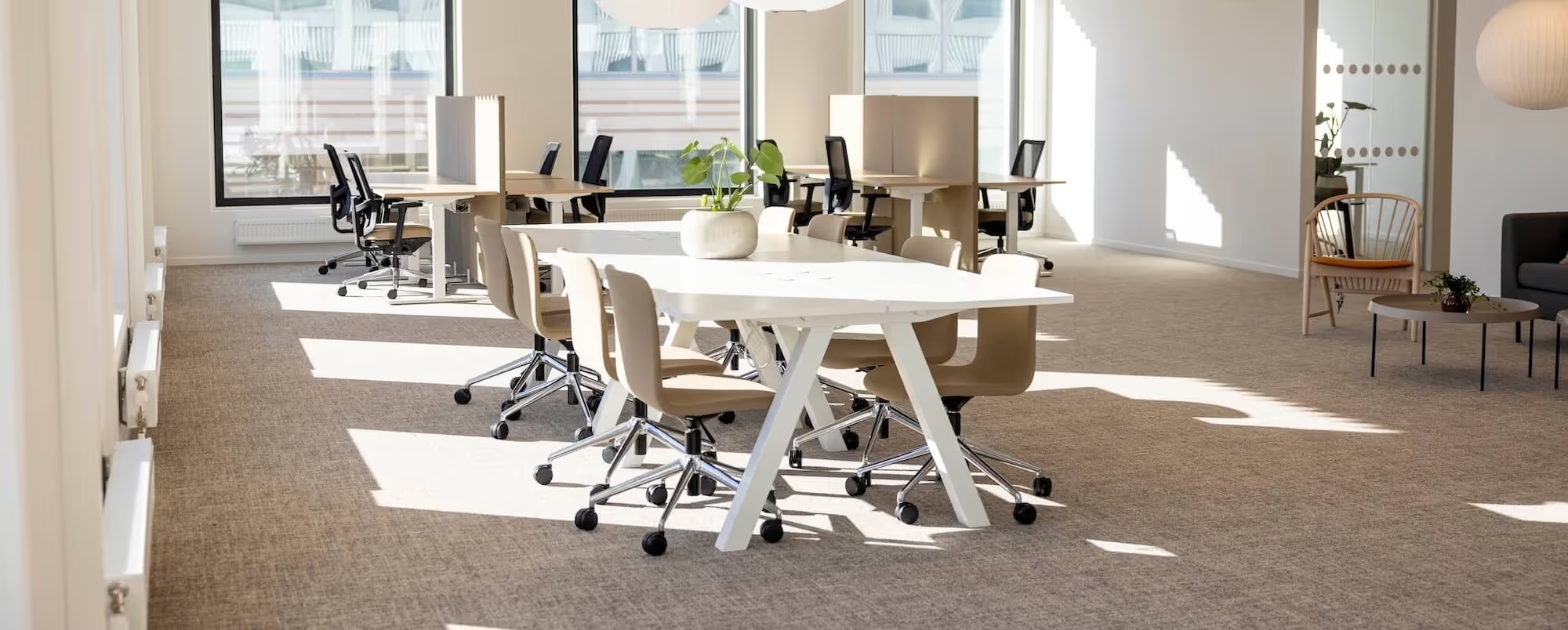
How a furniture subscription works for startups
A circular furniture subscription addresses each of these needs directly. You pay a monthly fee per square metre, the provider designs your space, delivers and installs everything, and handles any changes as your team grows. The furniture is already in stock, so deployment timelines are weeks rather than months.
- No upfront capital. The entire cost is operational - a monthly fee rather than a large one-time spend. Capital stays in the business where it can generate returns.
- Design included. Most subscription providers produce a 3D design of your space within 24-48 hours of receiving your floor plan. You do not need to hire an interior designer separately.
- Scale up easily. Adding workstations, a new meeting room, or a breakout zone is a request, not a procurement project. The provider handles it.
- Circular by design. When you grow out of your current space and move to a larger one, the furniture is collected and returned to the circular system. No disposal problem, no storage costs.
What should a startup budget for office furniture?
With a subscription model, the cost is structured per square metre per month rather than as a one-time purchase. This makes budgeting straightforward - it sits alongside rent and service charge as a predictable monthly outgoing rather than a capital line item.
The monthly cost varies by provider and specification, but for planning purposes, a furniture subscription typically represents a fraction of the monthly office rent cost - making it a manageable addition to operating expenses rather than a significant capital commitment.
Key Takeaways
- Fast-growing startups need speed, low upfront cost, scalability, and design quality from their office furniture - and traditional procurement delivers none of these reliably.
- A furniture subscription addresses all four - fast deployment, no upfront CapEx, built-in scalability, and professional design included.
- The monthly cost is predictable and operational, which fits the financial model of a growth-stage business much better than a large one-time capital outlay.
- Circularity removes the disposal problem that most startups discover at their first office move.
Setting up or scaling your startup's office? Talk to NORNORM about getting your new space designed and ready for move in.