Buy vs Rent vs Subscribe: Office Furniture Compared
When you're setting up or moving to a new office, one of the biggest decisions you face is how to acquire your furniture. Buying outright, renting on a short-term basis, and subscribing through a circular model all come with different cost structures, flexibility levels, and long-term implications - and the right answer depends on where your business is headed.

Table of Contents

Buy vs rent vs subscribe: at a glance
In short: Buying can suit businesses with stable, predictable long-term needs. Renting is best suited to temporary or short-term requirements. A circular furniture subscription is designed for longer-term workplaces that need the flexibility to evolve without owning and disposing of furniture.
Office furniture options: what are you actually choosing between?
Most people approach office furniture as a one-time purchase decision. You find a supplier, buy what you need, and the furniture stays until it breaks, goes out of style, or you move. But that is no longer the only model available - and for a growing number of businesses, it is not the smartest one either.
Today, you have three distinct routes: buying outright, renting on a short-term or flexible basis, and subscribing through a circular model. Each works differently, costs differently, and suits a different kind of business. Here is what you need to know before you decide.
Buying office furniture outright: full control, full commitment
Buying is the default. You pay upfront, the furniture is yours, and that is the end of the transaction. For some businesses, this still makes sense. For many others, it creates problems that only become visible later.
- High upfront capital expenditure. Furnishing even a modest office requires significant spend before a single person has sat down to work. That capital is locked into depreciating assets rather than being deployed into the business.
- You own the disposal problem. When you move, grow, or change your layout, the furniture is your responsibility. Most of it ends up in a skip or a landfill - at a cost to both your budget and your sustainability record.
- No flexibility built in. Buying locks you into a fixed setup. If your team doubles, contracts, or shifts to hybrid working, the furniture does not adapt with you.
- Depreciation without return. Office furniture depreciates quickly. What you spend £50,000 on today is worth a fraction of that in three years - and there is no mechanism to recover that value.
- Long procurement timelines. Ordering new furniture through traditional suppliers can take weeks or months. For a business under time pressure, that is a significant operational risk.
Buying works best when your space requirements are stable, your team size is predictable, and you have the capital to deploy without it affecting growth. For businesses in any kind of transition - moving, scaling, restructuring - it is the highest-risk of the three options.
Renting office furniture: flexibility with limitations
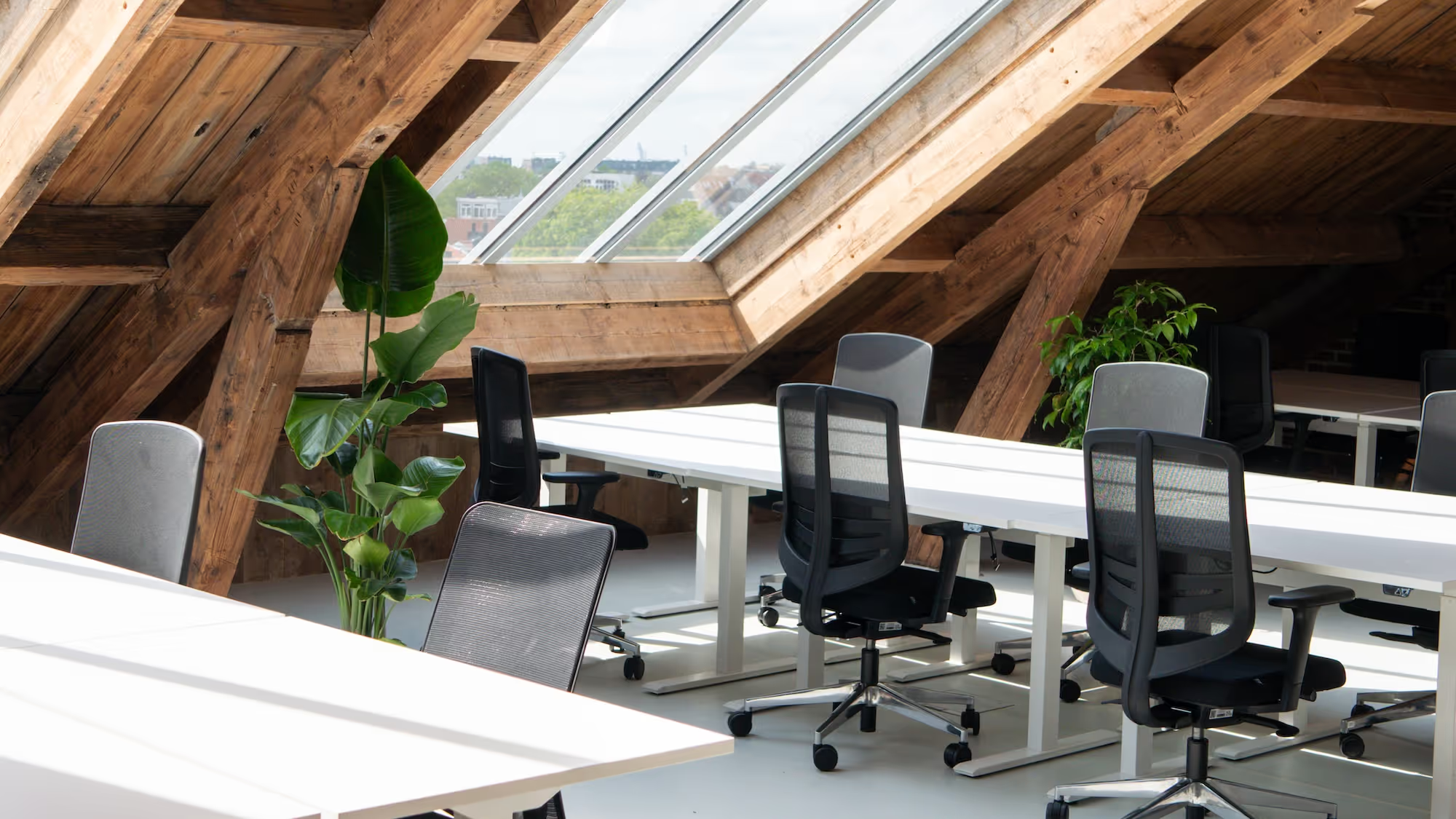
Office furniture rental - sometimes called furniture hire - gives you access to furniture for a defined period without buying it. You pay a monthly or weekly fee, and the furniture is returned at the end of the term. It is a model that suits specific situations well, but comes with constraints worth understanding.
- Good for short-term needs. Rental works well for temporary offices, project spaces, event setups, or bridge periods during a longer transition. It is designed for weeks or months, not years.
- Limited design choice. Rental catalogues tend to be functional rather than design-led. The range is narrower than buying or subscribing, and customisation is limited.
- Higher cost per month over time. The monthly cost of renting is typically higher than the equivalent cost through a subscription model, particularly over periods beyond six months. For anything longer-term, the economics shift against rental.
- No circular model. Most furniture rental companies are logistics businesses, not circular ones. Returned furniture may or may not be refurbished and reused - the environmental outcome is less predictable.
- Minimum terms and return conditions. Rental agreements often include minimum terms, return conditions, and damage charges that can make the total cost of use higher than it appears at first glance.
Renting is the right tool for the right situation - a temporary space, a pop-up, a satellite office for a short-term project. For a main office that you plan to operate for more than six months, the costs and limitations of rental tend to outweigh the benefits.
Subscribing to office furniture: the circular alternative
A furniture subscription - sometimes called Furniture as a Service, or FaaS - is a fundamentally different model. Rather than buying or borrowing furniture, you pay a monthly fee per square metre to access a fully furnished, professionally designed workspace. The provider retains ownership of the furniture throughout, handles all logistics, and takes responsibility for what happens to it when your needs change.
- No upfront capital expenditure. The entire cost is operational - a predictable monthly fee rather than a large one-time purchase. This frees up capital and moves furniture from the balance sheet into operating expenses.
- Built-in flexibility. As your team grows, shrinks, or reorganises, the furniture changes with it. Adding desks, reconfiguring zones, or returning items you no longer need are all part of the service.
- Circular by design. When furniture is returned, it is refurbished and redeployed - not disposed of. This removes the end-of-life problem entirely and supports measurable sustainability outcomes.
- Design and installation included. Reputable subscription providers handle the design of your space, delivery, and installation. You submit your floor plan and requirements; they take care of the rest.
- Fast deployment. Because circular furniture is already in stock and ready to go, installation timelines are significantly shorter than ordering new furniture - often weeks rather than months.
The subscription model was built for businesses that expect their space requirements to evolve. It suits fast-growing companies, businesses navigating office moves, and organisations with sustainability commitments they need to meet.
Cost comparison: what does each model actually cost?
Costs vary by market, provider, and specification - but the structure of each model is consistent enough to compare meaningfully.
- Buying: High upfront cost, plus future costs for disposal, storage of unused items, and replacement. No flexibility; full depreciation.
- Renting: Lower upfront cost, but higher monthly rates than subscription models - particularly beyond six months. Return conditions and damage clauses can add to the total cost of use.
- Subscribing: A monthly fee per square metre that covers furniture, design, delivery, installation, and ongoing flexibility. No disposal costs. No surprises.
The honest comparison is not month-one cost - it is total cost of use over the life of the office. In NORNORM’s TCO model, subscription can offer a lower total cost than buying from the first year, depending on office size, furniture specification, cost of capital and how frequently workplace needs change.
Which model is right for your business?
The answer depends on three factors: your time horizon, your growth trajectory, and your sustainability commitments.
- Stable, long-established team with no plans to move or resize: Buying may still make sense, provided you have the capital and accept the disposal risk at the end.
- Short-term space need (under six months): Rental is the practical choice. It is designed for exactly this scenario.
- Growing, moving, or operating in an uncertain environment: A subscription is the most rational model. It converts a fixed cost into a flexible one, removes the disposal problem, and scales with your business.
- ESG or sustainability targets to meet: Only a circular subscription model gives you measurable, reportable environmental impact data.
- Limited upfront capital or preference for OpEx over CapEx: A subscription is the only model that removes the capital expenditure entirely.
Key Takeaways
- Buying gives you ownership but locks in cost, inflexibility, and a disposal problem that most businesses underestimate until they are facing it.
- Renting suits short-term needs but becomes expensive and limiting over longer periods.
- A furniture subscription converts a capital cost to an operational one, builds in flexibility, and removes end-of-life responsibility entirely.
- Total cost of use - not upfront cost - is the right metric for comparing the three models over the life of an office.
- Only a circular subscription model provides measurable sustainability data for ESG and scope 3 reporting.
If you are setting up a new office and want to understand what a subscription model would cost for your space, get in touch with NORNORM for a no-obligation quote.