Does Your Office Furniture Meet WELL and BREEAM Standards?

WELL and BREEAM certification increasingly intersect with office furniture choices - through ergonomics, acoustic performance, material health, and circular economy credits. This guide explains which specific standards and credits are most directly affected by furniture, and how to ensure your specification contributes to rather than undermines your certification targets.

Table of Contents

Does office furniture affect WELL and BREEAM certification?

Yes - office furniture is a direct contributor to both WELL and BREEAM certification, though it is often overlooked in favour of more visible factors like energy systems, water efficiency, and building fabric.

Under WELL, furniture affects credits across multiple concepts: acoustics, materials, ergonomics, and thermal comfort. Under BREEAM, the key furniture-related contribution comes through the Materials category and, increasingly, through credits associated with circular economy principles.

Understanding where furniture fits in each framework helps you procure furniture that actively contributes to your certification targets rather than simply meeting a minimum standard.

Office furniture and WELL certification

WELL is a performance-based system focused on human health and wellbeing - and furniture has a direct impact on several of its core concepts.

  • Acoustic Comfort (WELL A07). Acoustic furniture - screens, booths, soft furnishings - contributes to meeting noise and privacy requirements. Well-specified acoustic zones within an open-plan office are essential for WELL acoustic credits.
  • Ergonomics (WELL V01-V04). WELL includes specific ergonomic requirements for seating, workstations, and posture variety. Height-adjustable desks, ergonomic chairs meeting specific adjustability criteria, and access to both seated and standing work are all relevant. A subscription model that includes certified ergonomic products can support these credits directly.
  • Materials (WELL X05). WELL requires disclosure of chemicals of concern in furniture materials and encourages procurement of products with relevant certifications (GREENGUARD, Cradle to Cradle, etc.).
  • Thermal Comfort (WELL T01). Furniture layout affects airflow and thermal distribution within a space. This is typically a space planning consideration rather than a specific product one.
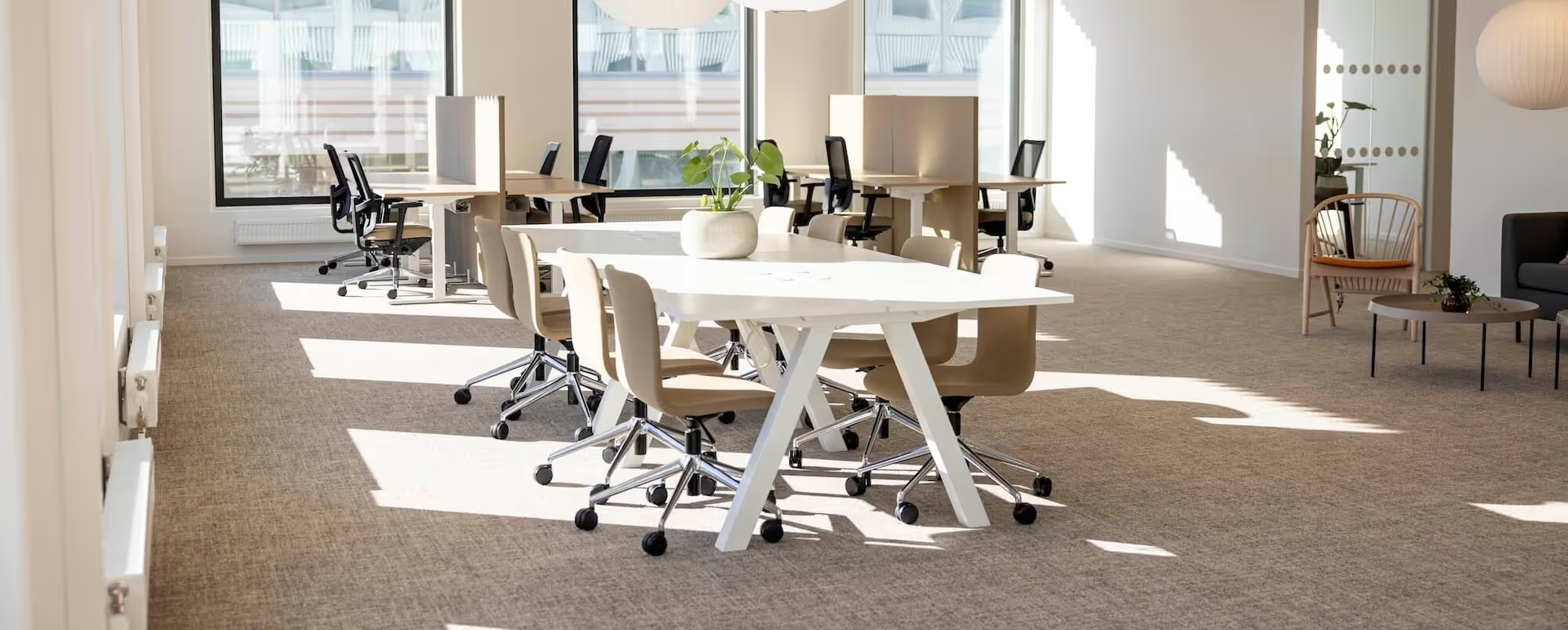
WELL and BREEAM certified office with ergonomic workstations acoustic booths and sustainably sourced furniture contributing to certification credits

Office furniture and BREEAM certification

BREEAM (Building Research Establishment Environmental Assessment Method) is the most widely used green building certification in Europe, and furniture contributes to it primarily through the Materials category.

  • Materials category (Mat 01, Mat 03). BREEAM awards credits for responsible sourcing of materials and for materials with low embodied carbon. Furniture from certified sustainable sources (FSC timber, for example) and from suppliers with documented environmental management systems can contribute to these credits.
  • Circular economy credits. BREEAM's evolving framework increasingly awards credits for circular economy approaches - including furniture procurement that keeps materials in use. A circular subscription model, where the provider retains end-of-life responsibility, is directly relevant to these emerging credits.
  • Waste (Wst 01). BREEAM awards credits for waste management - including how furniture is handled at end of building occupation or refurbishment. Circular take-back models support Wst 01 by removing furniture from the waste stream.

Key Takeaways

  • WELL certification is directly affected by furniture across acoustic, ergonomic, and materials credits. Height-adjustable desks, certified ergonomic chairs, and acoustic furniture are all relevant.
  • BREEAM certification is affected by furniture through responsible sourcing, embodied carbon, and increasingly through circular economy credits.
  • A circular subscription model supports both frameworks by providing certified ergonomic products, documented environmental credentials, and circular take-back that eliminates end-of-life disposal.
  • Engage your certification consultant early to confirm which specific credits your furniture specification will support - requirements vary by WELL and BREEAM version and rating level.

Looking for furniture that supports your WELL or BREEAM targets? Talk to NORNORM about how our circular subscription can contribute to your certification goals.

FAQs

We want our office to contribute to our BREEAM or WELL certification. Does the furniture we choose matter?

Yes - the furniture you choose can contribute to both WELL and BREEAM certification, though the mechanisms differ. Under WELL, furniture contributes primarily through ergonomics (supporting physical health), acoustic performance (supporting cognitive function and mental wellbeing), and material health (avoiding harmful off-gassing from furniture materials). Under BREEAM, furniture contributes through responsible sourcing credits (certified sustainable materials), circular economy credits (take-back and reuse), and lifecycle assessment credits. A circular subscription model addresses several of these simultaneously, particularly the circular economy and responsible sourcing credits under BREEAM.

Which specific BREEAM credits does office furniture contribute to?

Under BREEAM New Construction and In-Use, furniture-relevant credits fall primarily within the Materials category. The Mat 01 credit awards points for lifecycle assessment of building elements and increasingly includes furniture and fit-out. The Mat 03 credit covers responsible sourcing of materials, which includes certified timber and recycled content in furniture. Circular economy credits under newer BREEAM versions reward take-back schemes and documented reuse - which is where a circular subscription model has the clearest direct contribution. Your BREEAM assessor can confirm which credits are applicable to your specific assessment version and building type.

Which WELL building standard features are most directly affected by furniture choices?

Under WELL v2, furniture contributes most directly to the following features: Movement (V01-V04), which awards points for adjustable workstations, sit-stand furniture, and ergonomic seating that supports physical activity and posture; Sound (C01-C04), where acoustic furniture including booths, screens, and soft furnishings contribute to minimum background noise and speech privacy targets; and Mind (M07), which covers thermal and ergonomic comfort. Material health (X01) is also relevant for furniture with low volatile organic compound (VOC) emissions. A WELL consultant or assessor can map specific furniture choices to applicable features for your building and certification level.

How does a circular furniture subscription help with BREEAM or WELL certification specifically?

A circular furniture subscription can support BREEAM certification most directly through circular economy and responsible sourcing credits. The documented take-back scheme, refurbishment process, and reuse data from a circular provider give you the evidence trail that BREEAM assessors need for these credits. For WELL, the subscription model itself does not directly determine compliance - the specific furniture specification matters more for ergonomic, acoustic, and material health credits. A subscription provider with a catalogue of WELL-relevant furniture (adjustable desks, ergonomic chairs, acoustic seating) can design a space that supports WELL targets while delivering the circular economy benefits for BREEAM simultaneously.

What are the practical steps for making our office furniture contribute to a WELL or BREEAM assessment?

The most important practical step is to engage your BREEAM assessor or WELL consultant at the point of fit-out planning, before furniture is specified. They can identify which specific credits are in scope for your assessment, what evidence is required, and which furniture choices will most efficiently contribute to the target score. If you are using a circular subscription provider, brief them on your certification targets - a provider familiar with BREEAM and WELL requirements can design a specification that addresses the relevant credits and supply the documentation you need. Do not leave furniture to the end of the certification process.

What specific material certifications should our office furniture have to support our BREEAM or WELL assessment?

Certified sustainable timber is the most commonly referenced material requirement - FSC or PEFC certified wood is typically required for responsible sourcing credits under BREEAM. For WELL material health credits, low-VOC finishes and adhesives in furniture construction are relevant. Recycled content in metal components contributes to lifecycle assessment credits. A supplier who can provide Environmental Product Declarations (EPDs) for their furniture gives assessors the standardised data needed for lifecycle assessment credits under Mat 01. Ask any prospective supplier specifically which product certifications and EPDs are available for your shortlisted furniture items before committing to a specification.