How to Move Offices Without Moving Your Furniture
Moving offices is one of the most disruptive things a business can do - but it does not have to involve shifting desks and chairs across town. This guide explains how to leave your old furniture behind responsibly, get your new workspace set up fast, and arrive on day one ready to work.

Table of Contents

Should you take your furniture when you move offices?
The default assumption for most office moves is that the furniture goes too. You pack it, move it, unpack it, and try to make it fit the new space. But this assumption is worth challenging - especially if your furniture is more than a few years old, your new space has a different layout, or your team size has changed.
Moving furniture is expensive, time-consuming, and often results in pieces that do not work in the new environment sitting unused in storage or going to landfill anyway. For many businesses, the cost and disruption of transporting existing furniture exceeds the cost of starting fresh with a smarter model.
Here is a step-by-step approach to moving offices without moving your furniture - and arriving at your new space faster and better equipped than if you had taken everything with you.
Step 1: Audit what you have and what is worth keeping
Before deciding what to do with your existing furniture, you need to know what you have and what condition it is in. Most offices accumulate furniture over years without ever taking stock properly.
- Create a full inventory. List every piece of furniture by category - desks, chairs, storage, meeting tables, breakout seating. Note the quantity, approximate age, and condition of each.
- Identify what is genuinely good quality. Ergonomic chairs from known manufacturers, height-adjustable desks, and solid storage units may have resale value. Generic or heavily worn pieces almost certainly do not.
- Assess what will fit the new space. If you have the floor plan of your new office, check which pieces will work in the new layout. Furniture that does not fit is furniture you are paying to move for no reason.
- Separate into three piles: keep, sell/donate, and dispose. This gives you a clear picture of the real scope of the move and avoids paying to transport items that will be discarded on arrival.

Step 2: Clear the old space without landfilling everything
Once you know what you are leaving behind, you need a plan for each category. Responsible clearance takes slightly more effort than calling a skip company, but produces better outcomes for your sustainability record and often your costs.
- Donate good-quality pieces to charities or community organisations. Schools, social enterprises, and community groups often need office furniture and will arrange collection.
- Sell to second-hand office furniture dealers. Dealers who buy entire fitouts are the most efficient route for larger quantities.
- Use a circular take-back scheme. Some providers - including NORNORM - will collect furniture as part of a combined clearance and refurnish service, ensuring nothing goes to landfill.
- Use a certified office clearance company for the remainder. For items that cannot be reused or sold, use a clearance company that provides a waste transfer note and confirms landfill diversion.
Step 3: Have the new space furnished before day one
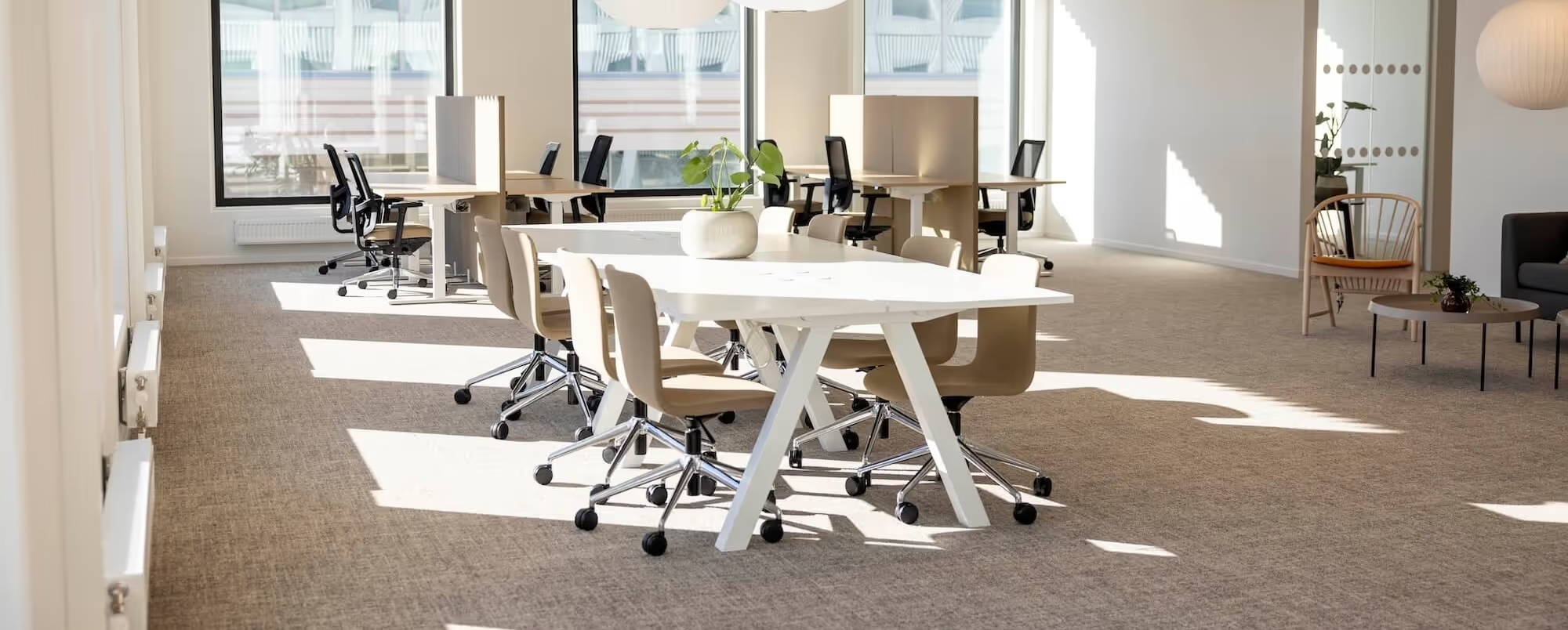
This is where most office moves lose time. The new space sits empty while furniture is ordered, procurement decisions are debated, and delivery windows are negotiated. A circular furniture subscription removes this problem - furniture is already in stock and the provider handles design and installation.
Step 4: Manage the move - people and equipment, not furniture
If you are not moving furniture, the physical move is significantly simpler. Your focus shifts to IT infrastructure, personal equipment, plants, artwork, and your team.
- Hire a commercial removals company for equipment. Server racks, monitors, and specialist equipment need careful handling.
- Plan IT migration in advance. Ensure internet connectivity and systems are operational before people arrive.
- Communicate the plan to your team clearly. People handle office moves much better when they understand the timeline and what the new space will look like.
- Organise a handback inspection for the old space. Walk the old office with your landlord to confirm the dilapidations position.
Key Takeaways
- Taking your furniture with you is often not the smartest option - particularly if it is ageing, does not fit the new layout, or will need replacing soon anyway.
- Audit before you decide. Know what you have, what condition it is in, and what will actually work in the new space.
- Responsible clearance beats landfill - donation, resale, and circular take-back are better for your budget and sustainability record.
- A circular furniture subscription lets you arrive at the new space day-one ready, with no procurement delays and no assembly required.
Moving offices in the next few months? Talk to NORNORM aboutfurnishing your new one as a single, circular service.