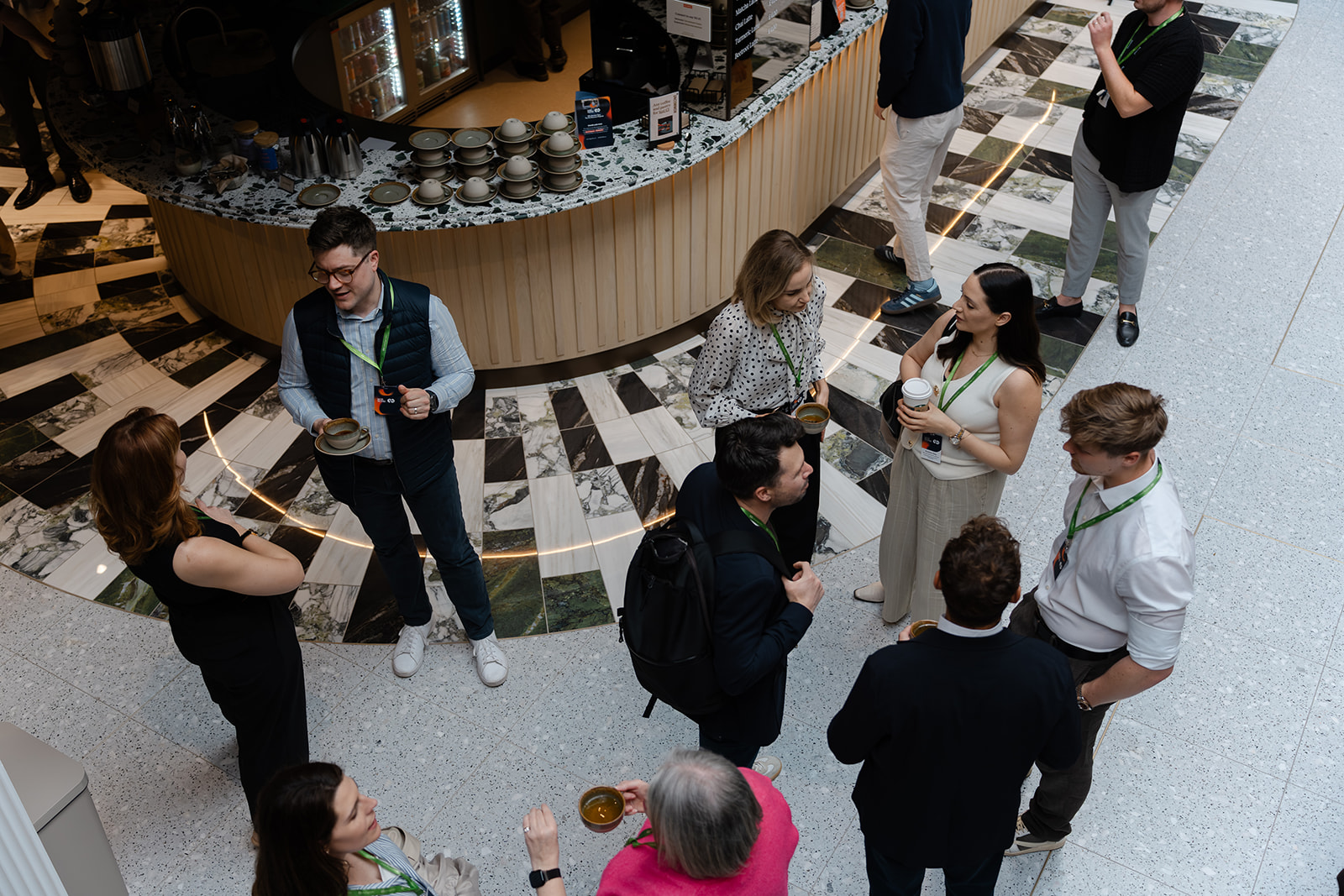
Why Flex Members Stay: Key Takeaways from Our Event with TechnologyWithin
On 5 May, NORNORM and TechnologyWithin brought together some of the UK's leading flex operators to explore what actually drives member retention - beyond amenities and quick fixes. Here's what the room had to say.

Retention Is the New Growth
Member retention is quickly becoming the defining metric in flex. But for many operators, it remains one of the hardest to pin down - and even harder to act on consistently.
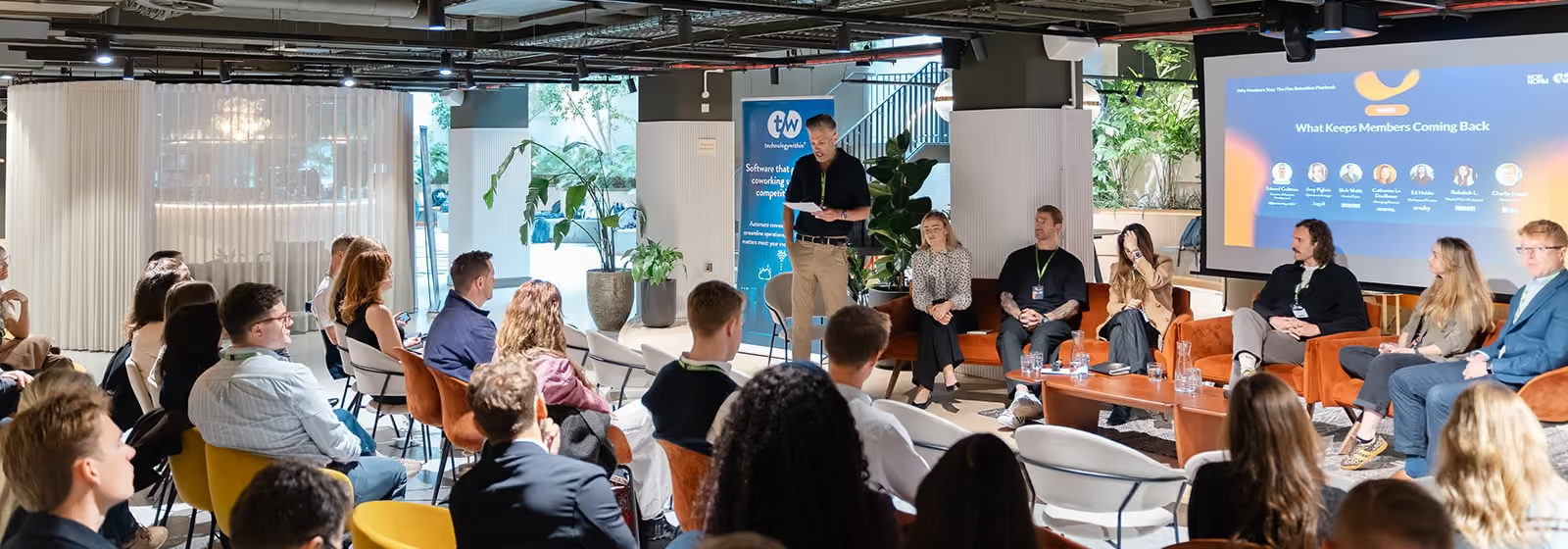
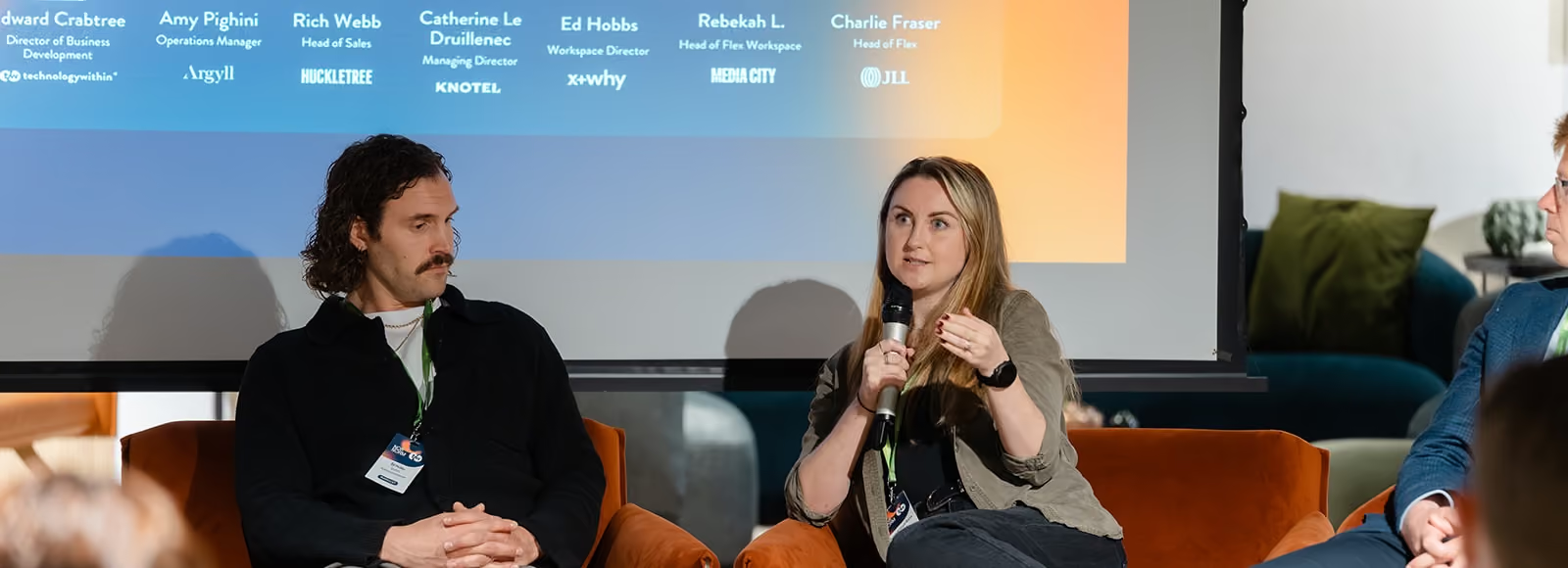
On 5 May, NORNORM and TechnologyWithin brought together operators from across the UK's flex sector for a morning of honest conversation at Uncommon, Holborn. The panel included voices from x+why, JLL, Huckletree, Argyll, Knotel, and MediaCityUK/Landsec, alongside a fireside chat with Hannah Mojica and Garry James from FOUNDRY.
What followed was a candid, practical discussion about what really keeps members coming back.
People Are the Product
If there was one message that cut through, it was this: retention is fundamentally a people problem.
"Retention is all about the people. It's the most important part, and if you do it well, people will grow with you," said Rebekah L. from MediaCityUK/Landsec.
Garry James from FOUNDRY put it even more plainly during the fireside chat: "People stick around for communities - they stay because they love the soft stuff."
Technology, data, and process all have a role to play. But the operators in the room were clear that no amount of tooling replaces the quality of the relationship between a space and its members.

Spotting the Warning Signs Early
Much of the panel discussion centred on how operators identify risk before it becomes churn.
For premium operators, the signals are often financial. Ed Hobbs from x+why noted that monetary warning signs tend to surface first at the higher end of the market. At Knotel, Catherine Le Druillenec focuses on a different signal: the need for more or less space. "We see the need for more or less space as the reason for change," she said.
Richard Webb from Huckletree pointed to something simpler - and harder to systemise. "The most important data that we rely on is communication." Becky (also from Huckletree) added that much of their retention intelligence lives within the team itself, not in a dashboard: "Our data is often held within our team's knowledge."
The takeaway: early warning systems look different across operators. But the common thread is paying close attention - to behaviour, to conversations, and to the spaces people are actually using.

Data and Design Both Matter
Retention isn't only about relationships. The physical workspace plays a bigger role than operators sometimes acknowledge.
Catherine Le Druillenec highlighted that tracking how members move through a building - what gets booked, when, and how often - gives Knotel a clearer picture of whether a space is working. "Being able to track accurate usage of the space is very effective," she said.
Charlie Fraser from JLL brought a different lens. He pointed out that the problems a member experiences in their current space directly shape what they'll look for next. "The issue you have now will shape what you want next and what becomes important." His observation was a useful reminder: retention and future acquisition are connected. A space that frustrates its members today is training them to look for something better tomorrow.
And when a problem does surface? Ed Hobbs' framing was quietly optimistic: "Every issue is an opportunity."
Proactive Beats Reactive
Across the panel, there was strong consensus that the operators who retain members best are the ones who don't wait to be told something is wrong.
Amy Pighini from Argyll described using a continuous feedback loop - surveys combined with one-to-one conversations - to anticipate member needs rather than react to them. "It's great to have a continuous flow to anticipate customer needs," she said.
Cath summed up Knotel's approach in one line: "We're constantly trying to make the stay better and be ready for the next customer."
The message was consistent: retention only works if it's always on. Not a quarterly check-in. Not a response to a complaint. A continuous, embedded part of how a space is run.
The Operational Foundation
Strong relationships need strong infrastructure behind them. Several panellists made the point that proactive retention doesn't scale without the right processes and tools to support it.
Richard Webb was direct: "Retention only works if you have the right process in place. You need to incentivise your teams around support and relationship management."
Ed Hobbs reinforced the point from a data angle: "Make sure your CRM works. All the effort in relationships is great, but the data needs to be stored."
Rebekah L. brought it back to frontline delivery: "Hosts and receptionists are actively delivering the service from the very first interaction. Continuous communication and an open-door policy are really important."

Key Takeaways
- Retention is a people problem first - relationships, community, and communication are the foundation.
- Early warning signs differ by operator, but consistent communication is the most reliable signal.
- Workspace design and usage data are underused retention tools.
- Proactive, always-on relationship management outperforms reactive responses.
- Processes and CRM systems are what allow good relationships to scale.
- As Charlie Fraser put it: "You can never have too many meeting rooms or phone booths."
NORNORM co-hosted this event with TechnologyWithin as part of an ongoing series exploring the future of flex workspaces. To learn more about how NORNORM supports flex operators with circular, flexible furniture subscriptions, get in touch here.