Challenging the business norm: An interview with Copper8's co-founder Cécile van Oppen
A year after launching, NORNORM invited circular economy consultancy Copper8 to spend six months reviewing every part of our operations. We sat down with co-founder Cécile van Oppen to talk about challenging the consultancy status quo, why the rules of our economy still hold circular models back, and why doing things a little better won't be enough.
Editor's note: This interview was first published in 2021, a year after NORNORM was founded.
When we first set out to build a fully circular business model within the furnishing industry, we knew that it would be near impossible to do alone.
The side of innovation that isn't nearly highlighted enough is just how much collaboration and humility it requires. There is a great romanticism to the thought that one idea can change the world overnight - but in reality, that idea will likely be debated, changed, challenged, berated, beta-tested, re-evaluated, revised, reworked, temporarily put on hold and then debated again. If the idea just so happens to be building a rapidly scaleable circular business model for the furnishing industry, this process is not only a reality, but a necessity.
Back in August when NORNORM had just passed the milestone of being a company for one year, we asked ourselves a very important question: "So, what have we built?". At that point we had the immense privilege of scaling our business rapidly over Denmark, Sweden and the Netherlands, and we knew we had something special - we just wanted to make sure it was right. So, we invited in the team from Copper8 - a consultancy dedicated to building up businesses in the circular economy - to join us for six months on our own internal "Circularity Initiative".
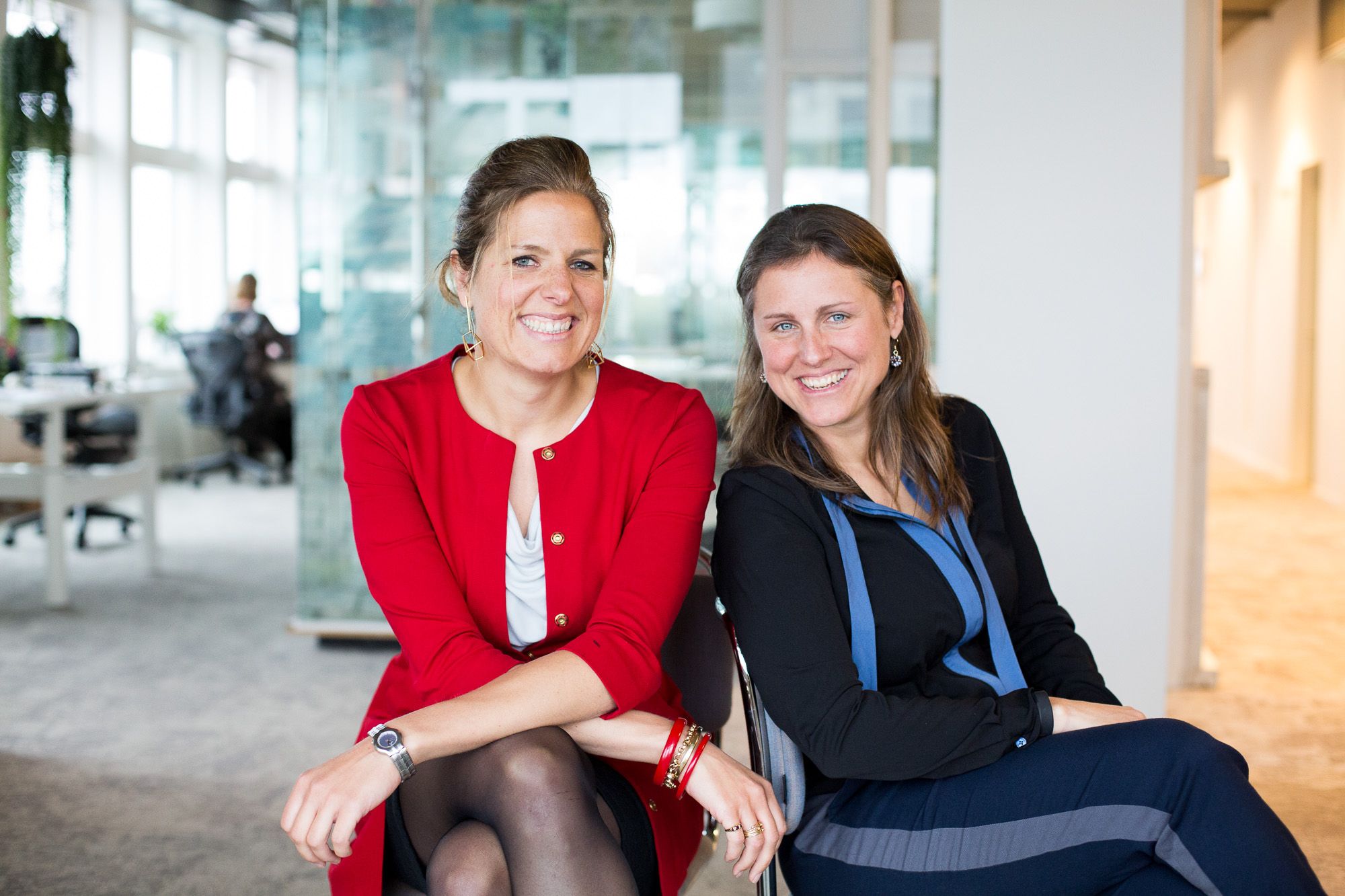
We are working with this team of experts to go through every level of our operations and help us create a better understanding of where we are and, more importantly, where we need to go from here. We sat down with Copper8's co-founder Cécile van Oppen (pictured left) to discuss her views on the circular economy, challenging the consultancy status quo, and the exciting work she and her team are running within NORNORM.
What is Copper8's main mission, and what led you and your partner Noor Huitema to found the business?
CvO: Our mission is to achieve as much impact as we can in the transition to a sustainable and circular economy. We are convinced that consultants can have a pivotal role in that transition, but we also believe that the traditional business model of consultancy organisations doesn't fit with the world and economy we envision.
This is also why Noor and I founded Copper8 - we want to create an alternative business model for the consulting industry. We continuously challenge business as usual and adapt our business model so that it fits circular economy principles.
You mainly help client companies transition to the circular economy. What does that mean in practice, and what challenges do you see most often?
CvO: Our range of work varies - from developing strategies to assisting organisations with circular procurement. The common denominator is that the transition to a circular economy requires organisations to look at collaboration in a completely different way.
Rather than having a transaction-based model, organisations have to seek deep forms of collaboration, essentially sharing both risks and rewards. This is a serious challenge, as many of us aren't trained to look for win-win solutions, but rather seek zero-sum games. The additional challenge is that mother earth often doesn't have a voice, but we need to make sure that our short-term economic decisions do account for long-term sustainability. In effect, we aren't looking for win-win solutions but win-win-win.
We also recognise that a lot of the rules that dominate our current economic system - varying from accounting standards like depreciation all the way to taxation - insufficiently incentivise circular business models. Where possible, we initiate experiment-based research that feeds into national debates on such important topics.
How did you start working in this field?
CvO: Personally, my curiosity started at a very young age. I always knew that I wanted to contribute to a better world. Slowly but surely I became convinced that the NGO route was not 'my' route, so to speak, as I wasn't convinced that it could deliver the necessary impact.
I started working at a small consulting firm that supported intrapreneurs, but didn't really focus on sustainability. Within about two years I was able to 'tip' the strategy to sustainability. In my work I was increasingly frustrated that the scope of sustainability was often limited to energy and efficiency. I believed (and still believe) that there is a larger picture to focus on - including how businesses are run.
How has working so closely with circular economy principles shaped the way you run Copper8, and what challenges have you faced?
CvO: The interesting thing is that a lot of organisations work on the circular economy without reflecting on their own business model. The 'economy' bit of the circular economy - at least for us - means that we have to work towards a different economy. This economy isn't going to magically appear; we're going to have to build it ourselves. And as tiny as we are (and want to remain), we believe we have an example to set.
We are an impact-first organisation, which means all we want to grow in is the amount of impact we can achieve. We don't want to grow in revenues or in team size, and this means we continually reinvent ourselves, feeding our curiosity with new topics and even leaving certain 'cash cows' behind as our 'competitors' learn how we work.
Copper8 works on projects with the goal of becoming obsolete. Can you explain that approach?
CvO: In traditional consulting models you could say that there is an incentive to create a dependency between clients and the consultancy. I think this is actually a perverse incentive, as it is focused more on turnover as a goal rather than impact. If impact is our primary goal, it means we have to educate the organisations we work with in our way of working. If we do this, we can maximise impact whilst staying relatively small as an organisation.
Your projects range from individual businesses to whole cities. Does a circular evaluation of Amsterdam look completely different from a circular office plan for a nutrition centre, or are there more similarities than people think?
CvO: The scale of projects might differ, but there are always key characteristics of projects that we look for before taking them on:
- There needs to be a high ambition - and thus a need for innovation.
- There needs to be the potential for impact.
- Collaboration between stakeholders should always be a key element.
You've worked on circular office design and furnishing projects before. What interested you about working with NORNORM on our Circularity Initiative?
CvO: I think it's massively interesting that you are pioneering a circular revenue model from the start, and really having a transformative vision on your industry. The honesty about NORNORM's ambitions, and the boldness in facing the challenges you will encounter, make us really proud to work with you on this topic.
In our own office we rented our furniture about eight years ago, and saw the difficulties our supplier had in organising the invoicing, reverse logistics and maintenance processes. As we know from our own model, it's much more interesting to start with a blank sheet, create a vision and work towards it.
What did your work with NORNORM focus on?
CvO: For the next few months we will look at the supply chain and develop a set of KPIs that NORNORM can work towards. The KPIs will focus both on the type of furniture (suppliers) and the circular processes such as refurbishing (partners), but also on the performance indicators that can be sold to clients.
What's one thing businesses should keep in mind when developing their own sustainability agendas?
CvO: To not only look at optimising what they currently do, but to rethink what they do in the first place. We need radical transformation to stay within our planetary boundaries, and just doing things a little bit better won't cut it.