Circularity in the Built Environment: From Slogan to System
Circularity in the built environment is no longer a future ambition. It is a practical business strategy. At our latest Circular Breakfast in London, industry leaders explored how to design, build and operate spaces that are regenerative, resilient and commercially viable.
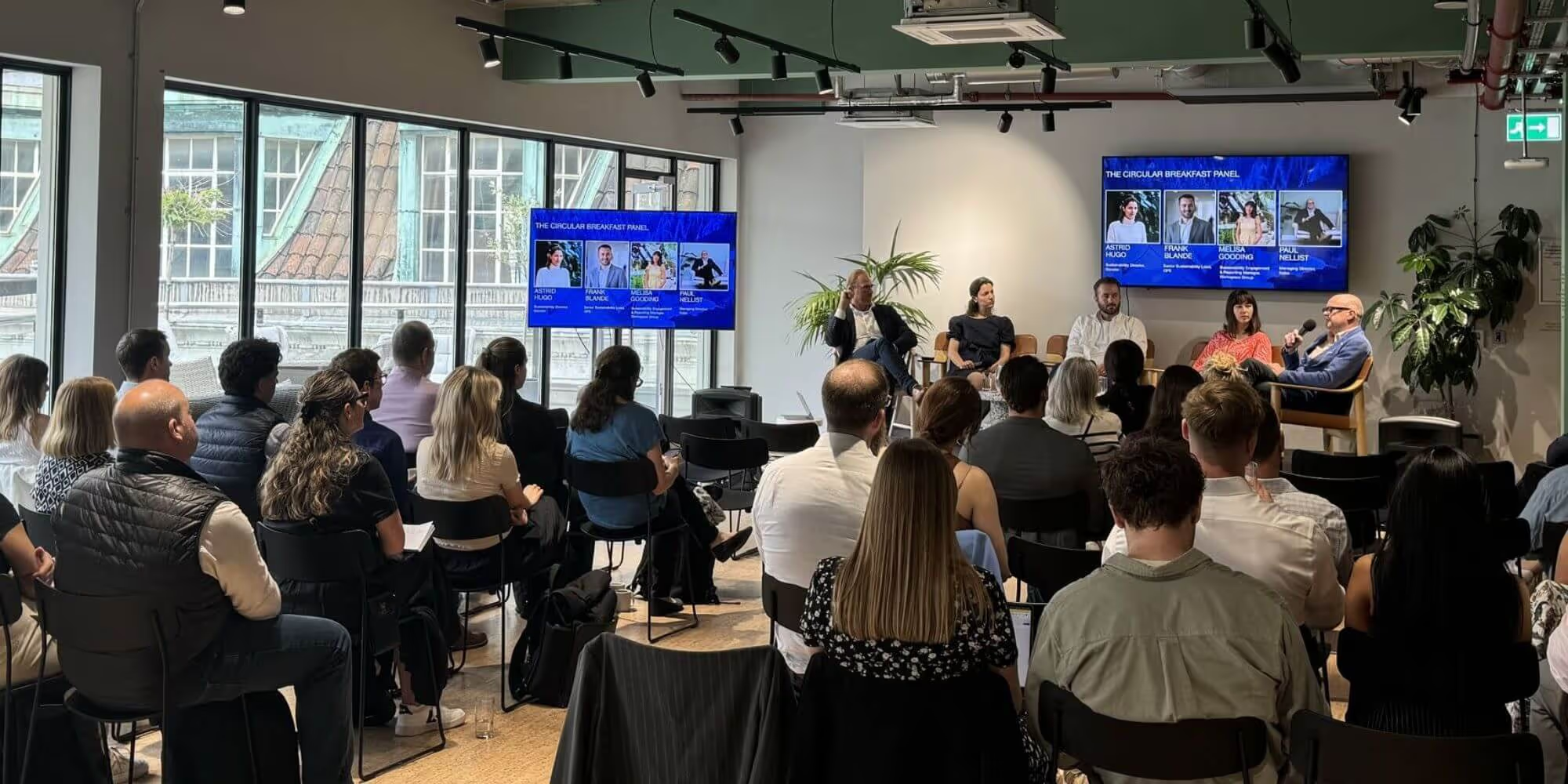
Circularity in the Built Environment Starts with Mindset
“Waste is only waste if it’s wasted.”
That comment from Melisa Gooding of Workspace Group set the tone for an honest and action-focused discussion hosted at Sustainable Ventures in London.
Moderated by NORNORM’s Founder and Chairman, Jonas Kjellberg, the conversation centred on a critical question:
How do we rethink how we design, build and operate spaces to create a regenerative built environment?
The answer was consistent. Circularity begins long before handover. It starts with early decisions and a clear mindset.
Design for Circularity, Early Not Later
Circularity does not have to increase costs. But it does require early integration.
From retaining 90% of a building’s structure to specifying reused steel and demountable partitions, the panel showed that embedding circular principles at concept stage protects both budget and carbon.
As Astrid Hugo from Gensler noted, sustainability must be embedded into everything we do.
The key insight?
When circularity is designed in early, it becomes part of the value proposition, not an add-on.
Premium Doesn’t Have to Mean New
Reclaimed materials and adaptive reuse are no longer compromises. They are increasingly seen as high-value features.
Designing for future adaptability creates spaces with story, character and longevity. Circular environments are not just responsible, they are desirable.
The shift is cultural. Premium is being redefined around quality, flexibility and long-term relevance.
Circularity and ROI Go Hand in Hand
There is growing alignment between sustainability strategy and financial performance.
Frank Blande from Great Portland Estates, GPE, shared how reused materials, sustainable bonds and embedded metrics are driving measurable commercial value.
Tenants and investors are asking for proof. Data-backed decisions are shaping leasing conversations. Circularity is becoming a differentiator in competitive markets.
Buildings designed for adaptability are simply better to occupy.
Operations Matter as Much as Construction
Circularity does not end at practical completion.
From repurposed furniture to composting coffee grounds, operational choices influence long-term impact. Paul Nellist from Koba emphasised the importance of designing for repair rather than landfill.
This applies as much to interiors as to infrastructure.
A circular building is one that evolves, not one that is replaced.
Systems, Not Slogans
Perhaps the most important takeaway was this: circularity must be operationalised.
Material passports. Cross-functional working groups. Gamified tenant recycling initiatives. Board-level KPIs tied to efficiency.
As Melisa Gooding explained, reframing sustainability around operational efficiency makes it measurable and accountable.
Circularity becomes scalable when it is built into business systems.
Culture Change Takes Time
Not every client says yes immediately. Supply chains resist. Procurement habits are hard to shift.
But consistent challenge drives progress.
The panel agreed: persistence works. Keep asking better questions. Keep pushing for alternatives. That is how change compounds.
Moving from Conversation to Action
Circularity in the built environment is no longer a ‘nice-to-have’. It is a practical pathway to resilience.
That is why NORNORM hosts the Circular Breakfast series, to create space for honest dialogue, share operational insight and accelerate industry-wide change.
Because circularity works best when it works across the system.