What Is a Circular Office? Sustainability Beyond Recycling
A circular office goes beyond recycling. It is a practical, system-wide approach to workspace design that keeps furniture, materials, and resources in use for longer. By prioritising reuse, adaptability, and flexible subscription models, organisations can reduce waste, lower carbon impact, and create workspaces that evolve with their needs.
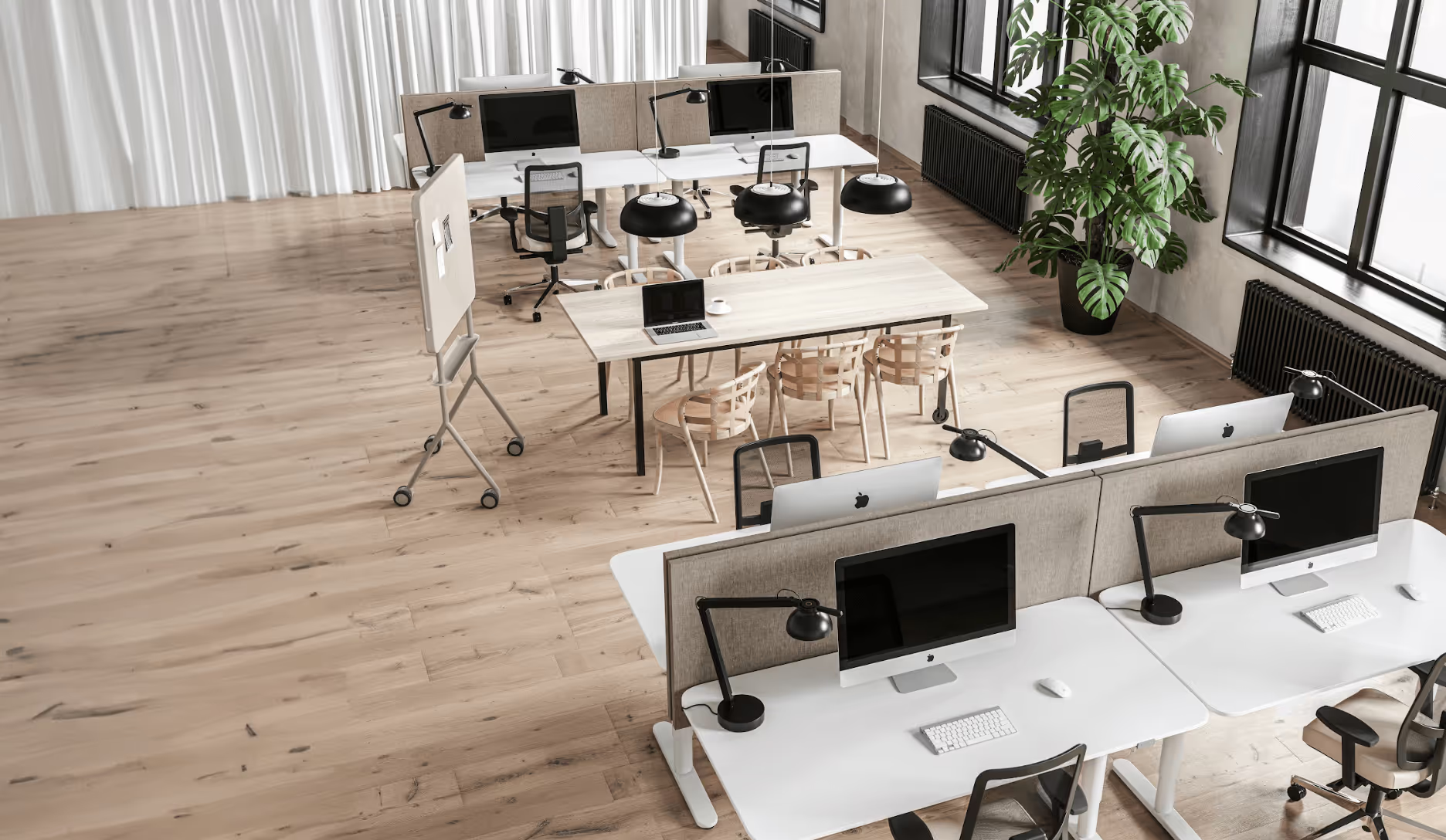
More organisations across the UK are rethinking how their workplaces are designed and managed. A circular office is no longer a niche idea. It is becoming central to conversations around ESG targets, hybrid working, and long-term cost control.
But circularity is about more than recycling bins or choosing better materials. It is a different way of thinking about the workplace altogether.
Instead of buy, use, and replace, a circular office is built around reuse, adaptation, and long-term value.
What Does a Circular Office Actually Mean?
A circular office keeps furniture, materials, and fit-out elements in use for as long as possible.
Traditional office design tends to follow a linear path. Products are bought, used for a few years, and then removed. Often they are still functional, but no longer fit the layout or brand direction.
A circular workplace works differently. Products are chosen and designed to:
- Last for years, not just one lease cycle
- Be reused across different layouts
- Be repaired or updated with ease
- Serve more than one life
The result is simple. Less waste. Lower carbon impact. Better use of resources.
Circularity is not about having less. It is about using what you have more intelligently.
Circular Office Design Starts with Better Decisions
Sustainability does not begin at disposal. It begins at design.
Circular office furniture is modular and built for longevity. If a component wears out, it can be replaced without discarding the whole desk or chair. If a team grows, the layout can change without starting again.
That makes sustainable office design both responsible and commercially sound. Businesses invest in solutions that evolve with them, whether they are scaling up, consolidating space, or shifting towards hybrid working.
Reuse Should Be the Norm
Many offices are refreshed every three to five years. Too often, furniture that still works perfectly well is removed simply because the space changes.
In a circular office, reuse is standard practice.
Furniture can be reconfigured, refurbished, or moved to another location. Materials stay in circulation. The need for new production is reduced.
It protects resources, but it also protects budgets. There is real value in extending the life of what already exists.
Flexibility Makes Circularity Possible
Organisations change constantly.
Teams expand. Headcounts fluctuate. Offices are now places for collaboration, focus, and connection rather than rows of fixed desks.
If furniture cannot adapt, every change creates waste and cost. New layout, new purchase.
Circular solutions are designed to flex with the business. They can be adjusted, scaled, and reused across teams or sites. That flexibility makes the workplace resilient and reduces unnecessary spend.
A Subscription Model That Keeps Furniture in Circulation
One of the most practical ways to enable a circular office is through a furniture subscription.
Instead of purchasing furniture outright, organisations subscribe to it. The furniture remains in circulation, maintained and managed throughout its life.
This approach works because:
- Furniture is maintained and repaired as needed
- Products are reused across multiple clients
- Businesses can scale up or down without being left with surplus stock
- Waste and embodied carbon are significantly reduced
It also creates financial clarity. There is no large upfront capital expense and no stranded assets if the business changes direction.
For organisations that value adaptability, this model makes sense.
A Circular Office Goes Beyond Furniture
Furniture plays a key role, but a truly circular office looks at the entire system.
Materials and Finishes
Flooring, partitions, acoustic panels, and wall systems all contribute to impact. Circular materials are chosen because they can be removed, reused, and repurposed.
Rather than permanent installations that require demolition, adaptable systems allow the space to evolve without creating unnecessary waste.
Smarter Use of Space
In hybrid organisations, offices are rarely full five days a week. A circular office is designed so that spaces can serve different purposes throughout the day.
One area might support focused work in the morning and collaboration in the afternoon. When space is used more intelligently, there is less need for expansion or frequent refurbishment.
Energy and Performance
Lighting, heating, and ventilation all shape the environmental footprint of a workspace. Energy efficient systems and smart controls reduce impact over time.
Circular thinking considers how a space performs, not just how it looks.
Everyday Behaviour
Circularity also depends on daily habits.
Reusable catering solutions, reduced office supply waste, and considered maintenance practices all matter. The design creates the conditions. The culture makes it stick.
A Circular Office Is a Long Term Approach
A circular office is not just about sustainable furniture. It is a joined-up way of thinking about materials, layout, energy use, and daily operations.
The aim is straightforward. Extend lifespans. Prevent waste. Create a workspace that adapts over time.
For organisations focused on ESG, flexibility, and responsible growth, circular design is not a compromise. It is a smarter way forward.
Ready to Move Towards a Circular Office?
The transition often starts with the workplace itself.
At NORNORM, we provide circular office furnishing through a flexible subscription model. Furniture is built to last, maintained throughout its life, and kept in circulation.
Because your office will change. Your furniture should be able to change with it.